
10 Websites to Start Learning Graphic Designs for FREE
Disclosure: Some of the links in this post are affiliate links. This means if you click on the link and purchase an item, I will receive an affiliate commission at no extra cost to you.
The first graphic designer I ever met did not have a design degree, expensive software, or years of experience. She started with a free laptop, a curiosity for design, and a few hours each week learning online. At first, her designs looked amateur. The colors felt off, the layouts were messy, and everything took longer than expected. But she kept practicing. A few months later, she was creating social media graphics for small businesses and earning money from a skill she learned for free.
Stories like this are becoming more common. Graphic design is one of the most valuable digital skills in today’s online economy and there are many Websites to Start Learning Graphic Designs for FREE. Businesses need logos, social media graphics, presentations, advertisements, and branding materials every day. The good news is that you no longer need expensive courses to learn these skills. Many platforms now offer high-quality design training completely free.
Graphic design can also open doors to freelancing, remote work, content creation, and even entrepreneurship. In fact, it is often listed among the 5 Lucrative Remote Skills You Can Learn in 2026 because of its flexibility and growing demand. If you are willing to learn and practice consistently, the websites in this guide can help you build professional design skills without spending a dime.
Why Paying for Design Courses Too Early Can Slow You Down
Sustainability is becoming a major priority for governments, businesses, and organizations around the world. Artificial intelligence is playing an increasingly important role in supporting environmental goals. This course focuses on how AI contributes to sustainability efforts. You will learn how organizations use AI to improve resource management, reduce waste, optimize operations, and support environmental initiatives.
The course demonstrates that artificial intelligence is not only about productivity and automation. It can also be used to address global challenges. Understanding AI’s role in sustainability helps learners appreciate the broader possibilities of this technology. As businesses place greater emphasis on environmental responsibility, knowledge in this area may become increasingly valuable. This course is particularly useful for professionals interested in leadership, innovation, and long-term strategic thinking.
Take a look at this next: 20 FREE Resources to Learn Cybersecurity
Why These FREE AI Courses with Certificates Matter
Many people wait too long before learning new skills. They assume they need perfect timing, expensive training, or a technical background. The truth is that technology moves quickly. Those who start learning early often gain significant advantages. These FREE AI Courses with Certificates remove many of the barriers that prevent people from getting started.
You do not need a degree or programming experience. All you need curiosity and a willingness to learn. The skills gained from these courses can support career growth, business development, productivity improvement, and future opportunities. Artificial intelligence is becoming integrated into nearly every profession. Whether you work in marketing, administration, education, healthcare, finance, customer service, or entrepreneurship, AI knowledge is becoming increasingly valuable.
Learning now positions you ahead of many people who are still waiting to start. If your goal is to increase your employability, consider combining these AI courses with 25 FREE Platforms to Learn Skills That Pay in 2026 for a broader skill-building strategy.
How to Get the Most Value from These Courses
Many learners make the mistake of collecting courses without completing them. They enroll in multiple programs but never apply what they learn. To get real results, focus on one course at a time. Complete the lessons. Take notes. Practice what you learn.
Look for opportunities to apply AI concepts in your daily work. The goal is not simply to earn certificates. The goal is to develop useful skills. After finishing a course, experiment with AI tools and workflows. The more you practice, the more confident you become. Consistency matters more than speed.
Even 20 to 30 minutes of learning each day can create significant progress over time.
Can These Courses Help You Get a Job?
A certificate alone does not guarantee employment. However, AI knowledge can make your resume more competitive. Employers increasingly value candidates who understand modern technologies. These courses demonstrate initiative and continuous learning. They show that you are adapting to industry changes.
When combined with practical skills and experience, AI certifications can strengthen your professional profile. You can also use what you learn to improve your job search process. For example, AI tools can help with resume writing, interview preparation, research, and productivity. If you’re actively applying for jobs, make sure you also read 10 Things You Must Do Immediately After Applying for a Job (to Avoid Rejection).
Small actions after submitting an application can significantly improve your chances of getting noticed.
The Future Belongs to AI-Literate Professionals
The future workplace will not belong exclusively to AI experts. It will belong to people who know how to work effectively with AI. That distinction matters. Most professionals do not need to build AI systems from scratch. They simply need to understand how AI works and how to use it effectively.
These FREE AI Courses with Certificates provide an excellent starting point. They help you build foundational knowledge without financial risk. They allow you to explore different AI applications before committing to advanced training. Most importantly, they give you practical skills that can remain valuable for years to come.
Final Thoughts
Artificial intelligence is no longer a technology of the future. It is already transforming industries, workplaces, and careers around the world. The good news is that learning AI has never been more accessible. Microsoft’s FREE AI Courses with Certificates provide high-quality training for beginners and professionals alike.
Whether you want to understand AI fundamentals, improve workplace productivity, explore generative AI, support business growth, or learn about AI applications in healthcare and sustainability, there is a course designed for you. Start with one course. Focus on learning consistently. Apply what you learn.
Over time, those small learning sessions can become skills that open doors to new opportunities, better jobs, and greater career flexibility. The best time to start learning AI was yesterday. The second-best time is today.
10 Websites to Start Learning Graphic Designs for FREE
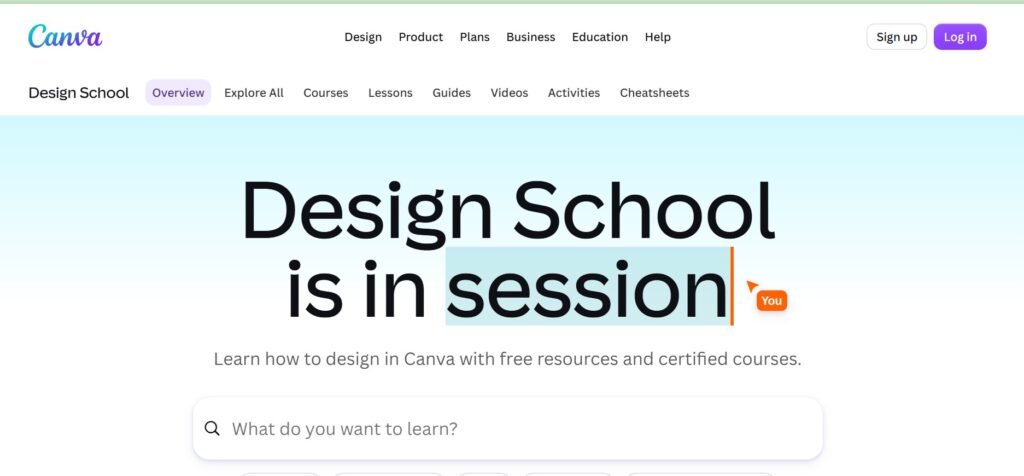
1. Canva Design School
Sustainability is becoming a major priority for governments, businesses, and organizations around the world. Artificial intelligence is playing an increasingly important role in supporting environmental goals. This course focuses on how AI contributes to sustainability efforts. You will learn how organizations use AI to improve resource management, reduce waste, optimize operations, and support environmental initiatives.
The course demonstrates that artificial intelligence is not only about productivity and automation. It can also be used to address global challenges. Understanding AI’s role in sustainability helps learners appreciate the broader possibilities of this technology. As businesses place greater emphasis on environmental responsibility, knowledge in this area may become increasingly valuable. This course is particularly useful for professionals interested in leadership, innovation, and long-term strategic thinking.
Take a look at this next: 20 FREE Resources to Learn Cybersecurity
Why These FREE AI Courses with Certificates Matter
Many people wait too long before learning new skills. They assume they need perfect timing, expensive training, or a technical background. The truth is that technology moves quickly. Those who start learning early often gain significant advantages. These FREE AI Courses with Certificates remove many of the barriers that prevent people from getting started.
You do not need a degree or programming experience. All you need curiosity and a willingness to learn. The skills gained from these courses can support career growth, business development, productivity improvement, and future opportunities. Artificial intelligence is becoming integrated into nearly every profession. Whether you work in marketing, administration, education, healthcare, finance, customer service, or entrepreneurship, AI knowledge is becoming increasingly valuable.
Learning now positions you ahead of many people who are still waiting to start. If your goal is to increase your employability, consider combining these AI courses with 25 FREE Platforms to Learn Skills That Pay in 2026 for a broader skill-building strategy.
How to Get the Most Value from These Courses
Many learners make the mistake of collecting courses without completing them. They enroll in multiple programs but never apply what they learn. To get real results, focus on one course at a time. Complete the lessons. Take notes. Practice what you learn.
Look for opportunities to apply AI concepts in your daily work. The goal is not simply to earn certificates. The goal is to develop useful skills. After finishing a course, experiment with AI tools and workflows. The more you practice, the more confident you become. Consistency matters more than speed.
Even 20 to 30 minutes of learning each day can create significant progress over time.
Can These Courses Help You Get a Job?
A certificate alone does not guarantee employment. However, AI knowledge can make your resume more competitive. Employers increasingly value candidates who understand modern technologies. These courses demonstrate initiative and continuous learning. They show that you are adapting to industry changes.
When combined with practical skills and experience, AI certifications can strengthen your professional profile. You can also use what you learn to improve your job search process. For example, AI tools can help with resume writing, interview preparation, research, and productivity. If you’re actively applying for jobs, make sure you also read 10 Things You Must Do Immediately After Applying for a Job (to Avoid Rejection).
Small actions after submitting an application can significantly improve your chances of getting noticed.
The Future Belongs to AI-Literate Professionals
The future workplace will not belong exclusively to AI experts. It will belong to people who know how to work effectively with AI. That distinction matters. Most professionals do not need to build AI systems from scratch. They simply need to understand how AI works and how to use it effectively.
These FREE AI Courses with Certificates provide an excellent starting point. They help you build foundational knowledge without financial risk. They allow you to explore different AI applications before committing to advanced training. Most importantly, they give you practical skills that can remain valuable for years to come.
Final Thoughts
Artificial intelligence is no longer a technology of the future. It is already transforming industries, workplaces, and careers around the world. The good news is that learning AI has never been more accessible. Microsoft’s FREE AI Courses with Certificates provide high-quality training for beginners and professionals alike.
Whether you want to understand AI fundamentals, improve workplace productivity, explore generative AI, support business growth, or learn about AI applications in healthcare and sustainability, there is a course designed for you. Start with one course. Focus on learning consistently. Apply what you learn.
Over time, those small learning sessions can become skills that open doors to new opportunities, better jobs, and greater career flexibility. The best time to start learning AI was yesterday. The second-best time is today.
2. Adobe Design Fundamentals
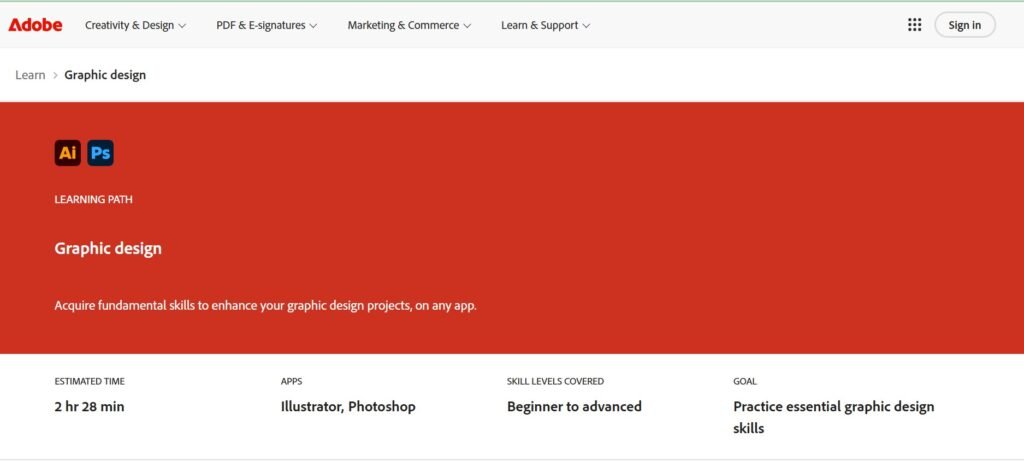
Adobe Design Fundamentals introduces beginners to the basic principles of visual design and creative work. It can help learners understand concepts such as layout, color, typography, composition, and visual communication. The course is useful for anyone who wants to build a foundation in design before moving into more advanced Adobe tools.
If you’re interested in combining creative skills with technology, you may also enjoy 10 APPS That Teach Tech Skills for FREE, which covers additional resources for building digital expertise.
3. Coursera (Audit for Free)
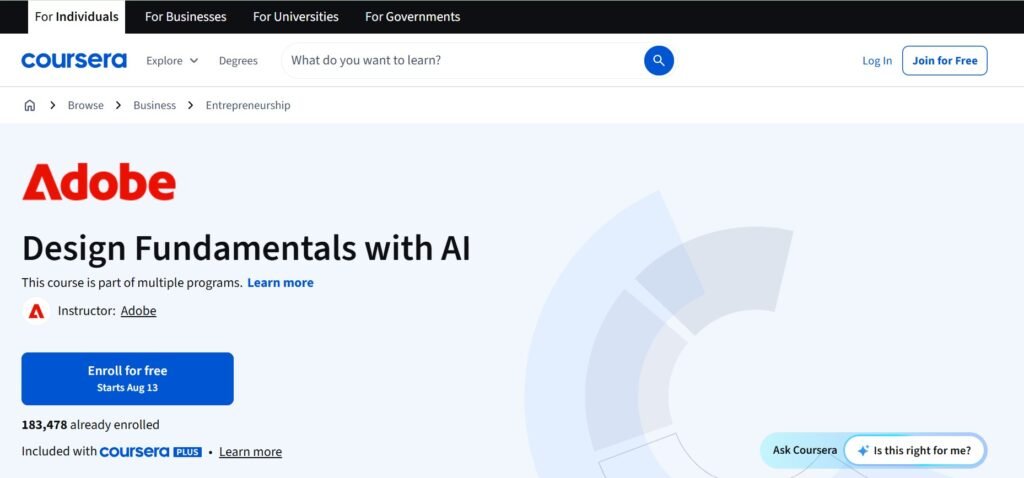
Coursera offers a different learning experience. Unlike tutorial-based websites, Coursera gives you access to structured courses created by universities and industry professionals. Many design courses can be audited for free. This means you can access the lessons without paying for a certificate.
For beginners who enjoy organized learning, this approach works extremely well. Instead of jumping between random tutorials, you follow a guided curriculum. Popular topics include graphic design, visual communication, design principles, branding, and creative thinking.
One advantage of Coursera is depth. The lessons often go beyond software tutorials and explore the reasoning behind design decisions. This helps students develop a stronger understanding of how design influences perception and behavior. Many people discover that they learn faster when information follows a structured path. Coursera provides exactly that experience.
See this next: 6 FREE Websites That Gets You Hired FAST
4. Alison Graphic Design Courses
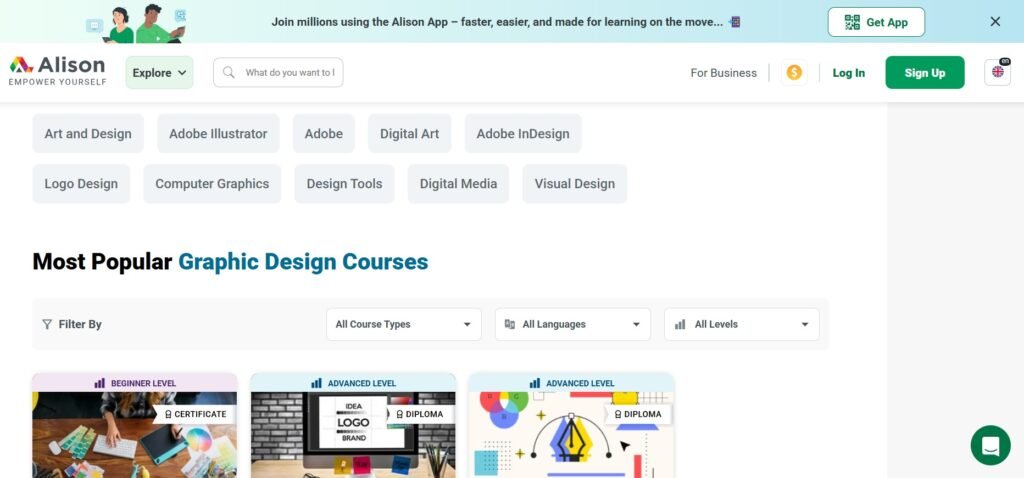
Alison is another excellent platform for beginners. The site offers complete graphic design courses at no cost. You only pay if you want a certificate. For people who enjoy measurable progress, Alison can be especially motivating.
Lessons are divided into manageable sections, making it easier to stay consistent. The platform also includes quizzes and assessments that reinforce learning. Many beginners struggle because they consume information without testing themselves. Alison helps solve that problem.
The structured approach creates a clear sense of advancement. As your skills improve, your confidence grows as well. Graphic design can feel overwhelming at first. Breaking the process into smaller milestones makes the journey much more manageable.
You’ll love this too: 9 Websites that teach you EXCEL courses for FREE
5. Envato Tuts+
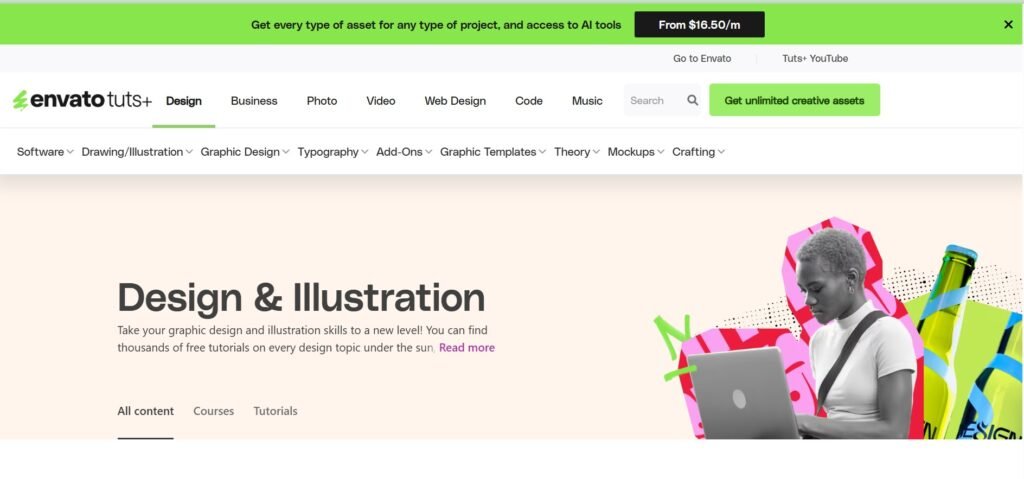
Envato Tuts+ has earned a reputation for practical, hands-on tutorials. The lessons focus heavily on real projects. Instead of simply explaining concepts, instructors show how those concepts are used in professional work.
You can learn about logo creation, branding, poster design, layouts, marketing materials, and many other design disciplines. The teaching style feels conversational. Many lessons feel like learning from a mentor sitting beside you.
That practical focus helps beginners bridge the gap between theory and execution. You begin seeing how professional designers approach projects. Then you learn how they solve problems. Also, you understand why certain design choices are made.
Those insights can dramatically improve your own work. The more examples you study, the easier it becomes to recognize strong design principles in action.
6. DesignCourse
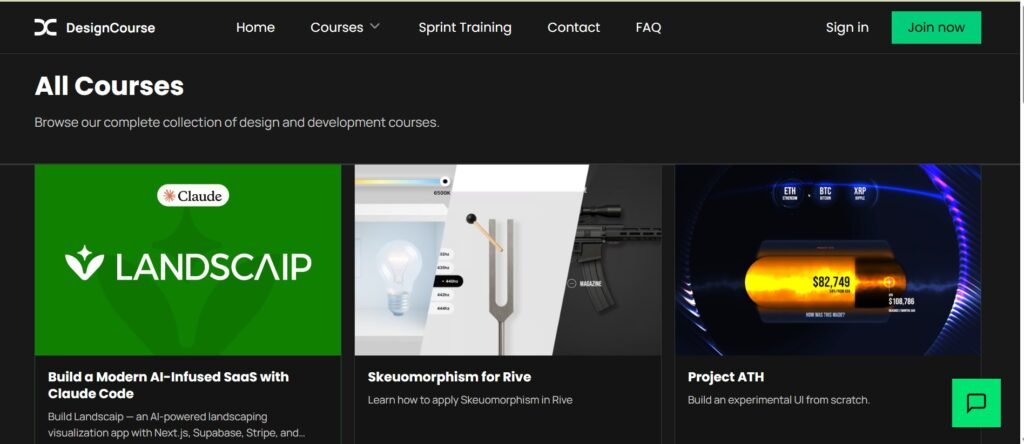
DesignCourse combines a website and YouTube channel dedicated to helping designers improve their skills. Its content is especially useful for people interested in modern design trends. The lessons often focus on clean layouts, user interfaces, website visuals, and digital experiences.
As more businesses move online, these skills become increasingly valuable. Good design is no longer limited to print materials. Websites, mobile applications, dashboards, and online platforms all require thoughtful visual design.
DesignCourse helps bridge the gap between traditional graphic design and modern digital design. This exposure can be particularly valuable if you hope to work remotely in the future. Many designers eventually transition into UI and UX-related roles. These positions often offer strong earning potential and flexibility.
If remote work appeals to you, consider exploring 8 Powerful AI Prompts you can use for job search alongside your design studies.
7. Google Fonts Knowledge
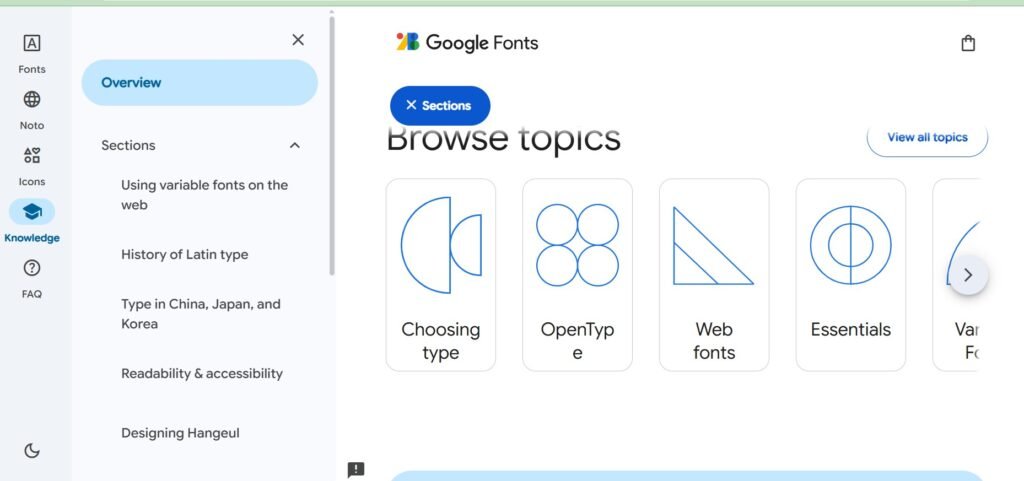
Typography is one of the most overlooked aspects of graphic design. Beginners often focus heavily on colors and images while ignoring fonts. Unfortunately, poor typography can ruin an otherwise strong design.
Google Fonts Knowledge helps solve this problem. It teaches how fonts work, how to pair them effectively, and when simplicity creates better results. Typography influences readability, professionalism, and user experience. The wrong font can make a design feel cluttered or confusing.
The right font can instantly improve clarity. Many design issues that seem mysterious are actually typography problems. Learning this skill early gives you a major advantage.
Professional designers spend significant time thinking about typography because it directly impacts communication. Understanding it will elevate every project you create.
Check this out next: 25 FREE Platforms To Learn Skills That Pay In 2026
8. Behance
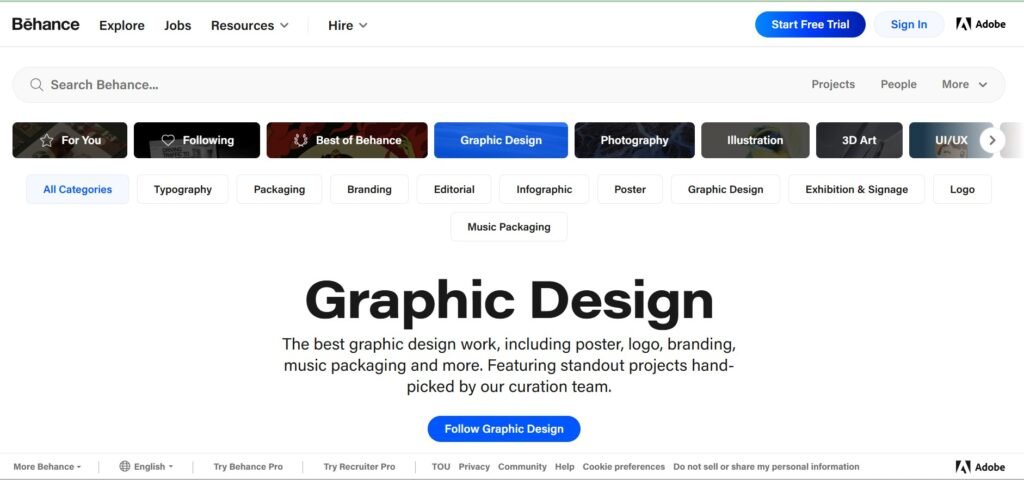
Behance is not a traditional learning platform. Yet it remains one of the most powerful educational resources available. The reason is simple. Exposure trains your eye.
When you regularly study excellent design work, you begin recognizing patterns. You notice how professionals use spacing. How they observe color combinations. The way they understand layout flow. You see how visual hierarchy guides attention.
These observations slowly improve your instincts. Many beginners underestimate the importance of studying great work. They focus entirely on creating. Creation is important. But observation is equally valuable.
Behance provides access to thousands of professional projects across countless industries. The platform functions like an endless design gallery. Every visit becomes a learning opportunity.
If you’re looking for additional ways to develop income-producing skills, 100 Hobbies That Will Turn Your Time Into Money includes several creative paths worth exploring.
9. Dribbble Learn Section
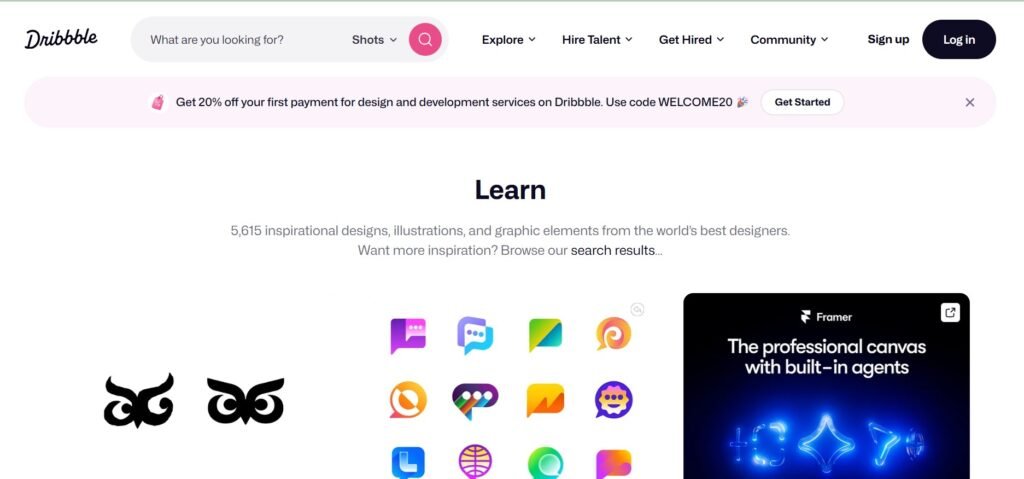
Dribbble is another platform that proves learning does not always happen inside a classroom. The Learn section helps beginners understand what modern design looks like in the real world. As you spend time exploring projects, you begin noticing patterns that separate amateur work from professional work.
You see how experienced designers structure layouts. How they use spacing to create balance. Then, you observe how they simplify information instead of overcrowding a design. This type of learning is valuable because design is visual.
This is worth a look: 20 FREE Resources to Learn Cybersecurity
Reading about design principles is helpful. Seeing them applied repeatedly is even better. The more quality work you expose yourself to, the stronger your design instincts become.
Over time, your eye naturally starts identifying strong compositions, effective color choices, and better typography. That improvement often happens quietly. You may not notice it immediately. Then one day you compare your current work to your older designs and realize how much progress you’ve made.
You might strengthen your career opportunities through 7 Websites To Start Learning Video Editing For FREE
Many successful designers still spend time on platforms like Dribbble because exposure remains one of the best teachers available. Learning design is not just about creating. It is also about observing.
10. FreeCodeCamp
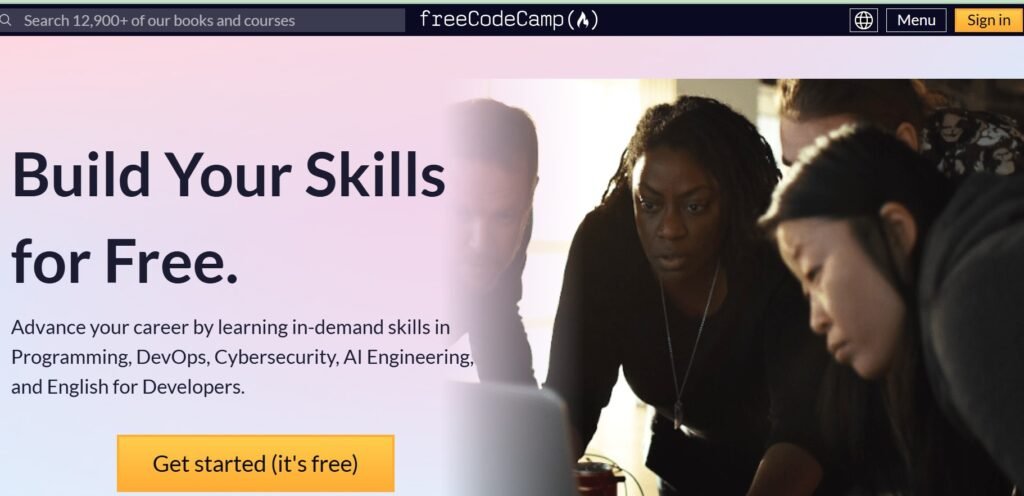
Most people know FreeCodeCamp as a platform for learning programming. What many beginners do not realize is that it also contains useful content for aspiring designers. The platform teaches concepts that directly support design development. Topics often include visual hierarchy, design basics, user experience concepts, and practical explanations that make complicated ideas easier to understand.
One of the reasons FreeCodeCamp works so well is its beginner-friendly teaching style. The lessons avoid unnecessary complexity. Instead, they focus on helping learners understand the foundations. This is especially useful if you eventually want to move into web design, UI design, or other digital design fields.
The combination of design knowledge and technical understanding can create powerful opportunities. Many remote employers value professionals who understand both design and digital platforms. That is why learning complementary skills can be beneficial. For example, 9 Websites That Teach You Excel Courses for FREE can help you build additional workplace skills that increase your value in remote positions.
The Secret Most Beginners Miss
Many people believe graphic design is primarily about talent. That belief discourages countless beginners before they even start. The reality is much simpler. Graphic design improves through exposure. It improves through repetition. Graphic design improves through consistent practice.
The designers you admire today were not born knowing how to create stunning visuals. They developed those skills over time. Then they practiced some more. This process is not glamorous. But it works. Small daily improvements create remarkable results over time.
A person who spends thirty minutes designing every day will often outperform someone who studies theory for hours but never practices. The key is consistency. Not perfection, expensive tools or courses. Consistency.
What Should You Practice Every Day?
Many beginners open a design tool and immediately feel overwhelmed. They do not know what to create. The solution is to keep practice simple. Design a social media post. Create a flyer. Build a mock advertisement. Redesign a business logo.
Create a presentation slide. Experiment with typography. The goal is not creating perfect work. The goal is developing familiarity. Every project teaches something. As your confidence grows, you begin taking on more challenging projects.
Those small practice sessions gradually transform into real skills. If you’re using AI to improve your learning process, you may find 6 Powerful ChatGPT Prompts to Help Reduce Your Workload helpful for brainstorming ideas and accelerating productivity.
Why You Should Not Rush to Buy Courses
The images repeatedly emphasize an important lesson. Start with free resources first. Many beginners spend money because they assume paying guarantees progress. Unfortunately, that is not always true. Buying a course does not automatically create discipline.
It does not automatically create practice habits. It does not automatically create skill. Progress comes from implementation. The internet already provides enough free material to build a strong foundation in graphic design.
Once you have completed free courses, practiced consistently, and identified your interests, then you can decide whether premium training is worth the investment. At that point, you will know exactly what knowledge gaps you need to fill. That makes future purchases far more strategic.
How Graphic Design Can Lead to Income Opportunities
Graphic design is not just a creative hobby. It can become a valuable income-producing skill. Businesses constantly need visual content. They need graphics for websites, social media posts and marketing materials. Additionally, they need presentations and branding assets.
As your skills improve, opportunities begin appearing. Some designers freelance. Others work remotely. Some build agencies. Others sell digital products. Many even combine graphic design with affiliate marketing and content creation.
In fact, design skills pair extremely well with Step-by-Step Guide on How to Start Affiliate Marketing in 2026 because quality visuals often improve content performance and audience engagement. The possibilities expand as your abilities grow.
Building a Learning Plan for the Next 30 Days
Instead of trying to master everything at once, focus on gradual improvement. Spend the first week learning basic design principles through Canva Design School and Adobe Design Fundamentals. Use the second week to complete structured lessons on Coursera or Alison.
During the third week, create daily practice projects using concepts you have learned. Spend the fourth week studying professional work on Behance and Dribbble while continuing to create your own designs. This approach balances learning and implementation.
Many beginners spend too much time consuming information. Growth happens faster when learning and practice happen together.
Graphic Design Is Still a Human Skill
AI tools continue improving every year. Many people worry that creative careers will disappear. However, design remains heavily dependent on human judgment. Tools can generate visuals. Humans decide which visuals communicate effectively with audiences and understand emotions.
They understand context. That is why graphic design remains one of 10 Skills AI Can’t Replace That You Should Be Learning. Technology can assist the process. It cannot replace creativity, strategy, and communication. Those qualities remain valuable.
Final Thoughts
Learning graphic design no longer requires a degree, expensive software, or costly training programs. The websites in this guide provide enough knowledge to help beginners build a strong foundation completely free. Canva Design School teaches practical fundamentals. Adobe teaches design thinking.
Coursera and Alison provide structured learning. Envato Tuts+ delivers hands-on tutorials. DesignCourse explores modern digital design. Google Fonts Knowledge strengthens typography skills. Behance and Dribbble train your design eye. FreeCodeCamp offers beginner-friendly design education.
Most importantly, remember the lesson highlighted throughout the images. Graphic design is not talent first. It is exposure, repetition and daily practice. Start with free resources. Practice consistently. Improve one project at a time.
Then decide what is worth investing in later. The designer you want to become is built through small actions repeated over time.




12 Comments