

20 FREE Resources to Learn Cybersecurity
Disclosure: Some of the links in this post are affiliate links. This means if you click on the link and purchase an item, I will receive an affiliate commission at no extra cost to you.
Cybersecurity is one of those fields where you can build a solid foundation without paying for expensive courses or bootcamps. In fact, some of the world’s biggest technology companies and cybersecurity organizations offer free training, practical labs, certifications, and communities that help beginners develop real skills. The challenge isn’t finding resources. It’s knowing which ones are actually worth your time.
Many beginners jump from one course to another without following a clear path. A few weeks later, they feel overwhelmed because they have watched plenty of videos but haven’t gained much practical experience.
You simply need the right combination of courses, hands-on practice, certifications, communities, and learning roadmaps. That’s exactly what you’ll find in this guide.
These FREE resources to learn cybersecurity include beginner-friendly courses, interactive labs where you learn by doing, respected certifications, GitHub repositories packed with learning material, and communities filled with people who are on the same journey.
Whether your goal is becoming a SOC analyst, penetration tester, cloud security engineer, or simply understanding how cybersecurity works, these resources will help you build your knowledge step by step.
Come here next: 10 Digital Skills That Will Keep on Paying in 2026 and Beyond
Once you begin building technical skills, you’ll also want to learn how to turn those skills into opportunities. My guide on 10 APPS that teaches tech skills for FREE is another excellent place to discover beginner-friendly platforms that help you learn technology every day.
20 FREE resources to learn Cybersecurity
1. Cisco Networking Academy
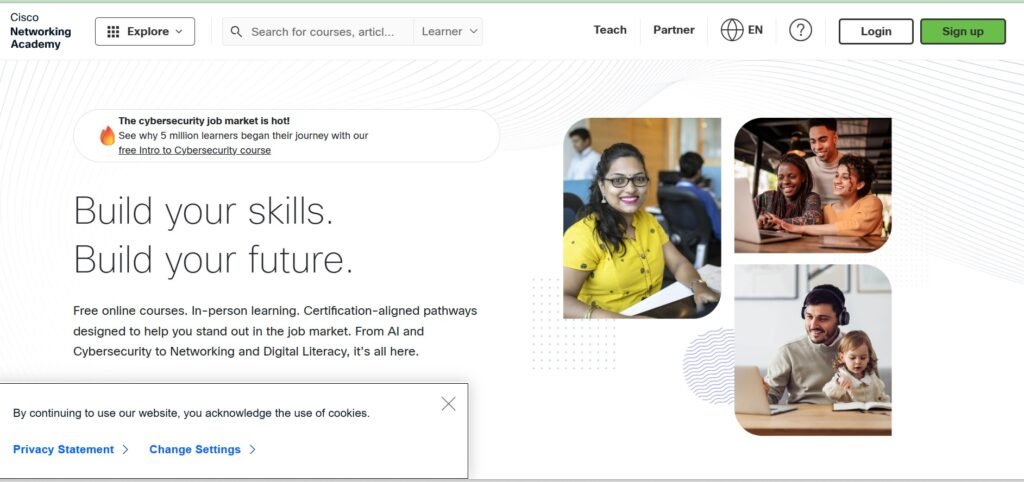
Starting something new feels much easier when the lessons assume you know nothing. That is exactly why Cisco Networking Academy deserves the first spot on this list of FREE resources to learn cybersecurity.
Cisco has trained millions of learners around the world through its Networking Academy. The platform offers structured courses that introduce cybersecurity in a simple and practical way. Instead of throwing technical words at you immediately, each lesson builds on the previous one.
Have you ever heard terms like malware, phishing, encryption, firewalls, or network security, don’t worry. Cisco explains these topics using real examples before moving into more technical concepts.
One of the biggest advantages is the learning structure. Every course includes videos, reading materials, quizzes, and practical activities that help reinforce what you learn. You never feel like you’re simply watching endless lectures.
Many of the beginner cybersecurity courses also include a certificate after successful completion. While these certificates may not replace professional certifications, they still strengthen your LinkedIn profile and show employers that you’re actively learning.
If you’re planning a career in tech beyond cybersecurity, you may also enjoy 10 APPS that teaches tech skills for FREE, which introduces other excellent platforms for building technical skills.
2. IBM SkillsBuild

Instead of asking you to choose from hundreds of unrelated courses, the platform provides guided learning paths. These paths organize lessons into a logical order, making it easier to know what to study next.
The cybersecurity learning path starts with the fundamentals. You’ll learn common cyber threats, online safety, risk management, security principles, and how organizations protect their systems.
IBM explains complex ideas using simple language. As you progress, you’ll earn digital certificates that demonstrate your commitment to learning. These certificates can support internship applications or entry-level job searches.
IBM also introduces cloud security, artificial intelligence, and data protection during some learning paths. Those skills become valuable as your cybersecurity knowledge grows.
Try completing one learning path before moving to another website. Building one strong foundation often works better than collecting unfinished courses from different platforms.
Once you begin earning certificates, you’ll also need a strong resume. My guide on 8 Powerful AI Prompts you can use for job search shows how AI can help improve resumes, cover letters, and interview preparation.
3. Microsoft Learn (Security Track)
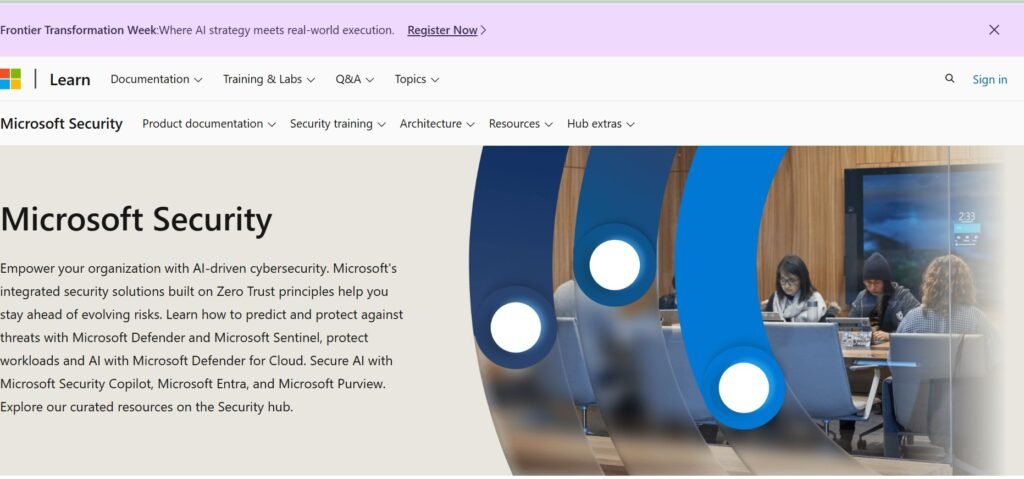
Cloud computing continues to grow every year. As more businesses move their systems online, cloud security has become one of the fastest-growing cybersecurity specialties.
The platform provides completely free learning modules covering Microsoft security technologies, identity management, cloud security, compliance, and threat protection. Many modules also include practical labs that allow you to work inside real Microsoft environments.
Even if you don’t plan to specialize in Microsoft products, understanding cloud security gives you an advantage when applying for cybersecurity jobs. You can revisit completed modules whenever you need a refresher before interviews or certification exams.
Cloud skills also pair well with AI knowledge. If you’re interested in both fields, don’t miss 9 FREE AI tools every remote worker should have in 2026, where you’ll discover practical AI tools that improve productivity.
4. Open University – OpenLearn

Not everyone enjoys long courses that take several months to complete. Sometimes you simply want to learn one topic before moving on.
OpenLearn makes that possible. The platform offers shorter cybersecurity courses that focus on specific subjects without requiring a huge time commitment. You might complete one course over a weekend while still learning valuable concepts.
Topics include digital safety, online privacy, cybercrime, network security, and protecting personal information. That makes OpenLearn another excellent choice among FREE resources to learn cybersecurity, especially for learners who become overwhelmed by lengthy training programs.
After finishing many courses, you’ll receive a Statement of Participation. As you continue learning, remember that technical skills alone won’t land every opportunity. My guide on 6 FREE Websites that gets you hired FAST introduces platforms where companies actively recruit skilled professionals.
5. TryHackMe
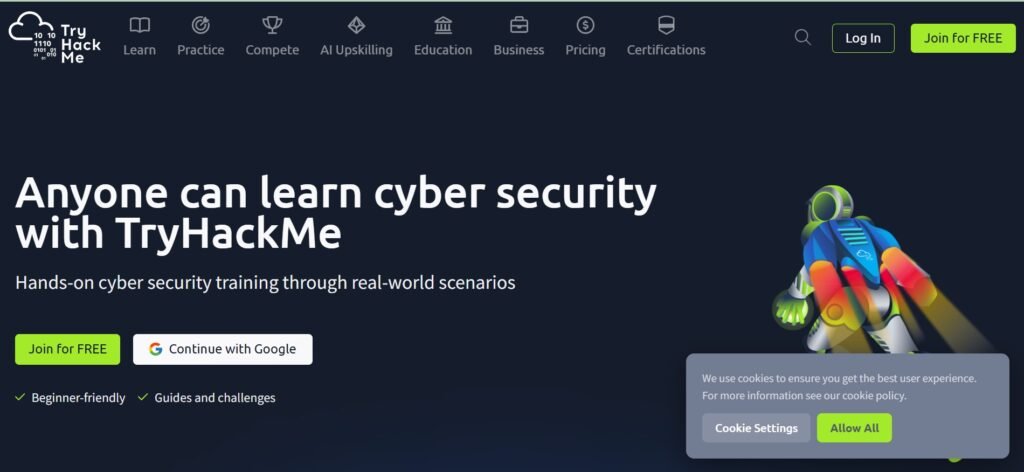
Reading cybersecurity theory helps, but practising cybersecurity can make a major difference. That is why TryHackMe has become a popular platform for beginners who want hands-on experience.
Instead of only watching videos, you can enter interactive labs and solve security challenges yourself. Each learning room focuses on a specific skill. Some rooms cover Linux basics, while others introduce networking, web security, Windows systems, ethical hacking, or digital forensics.
The platform guides you through each exercise with step-by-step instructions. Many beginner rooms are also free, making TryHackMe a valuable resource for anyone looking to gain practical cybersecurity experience. Completing these labs can also help you prepare for more advanced platforms, including Hack The Box.
As your technical skills improve, you’ll eventually need freelance clients or remote opportunities. That’s where25 FREE Platforms To Learn Skills That Pay In 2026 can help you turn new skills into real work.
6. Hack The Box (Free Tier)
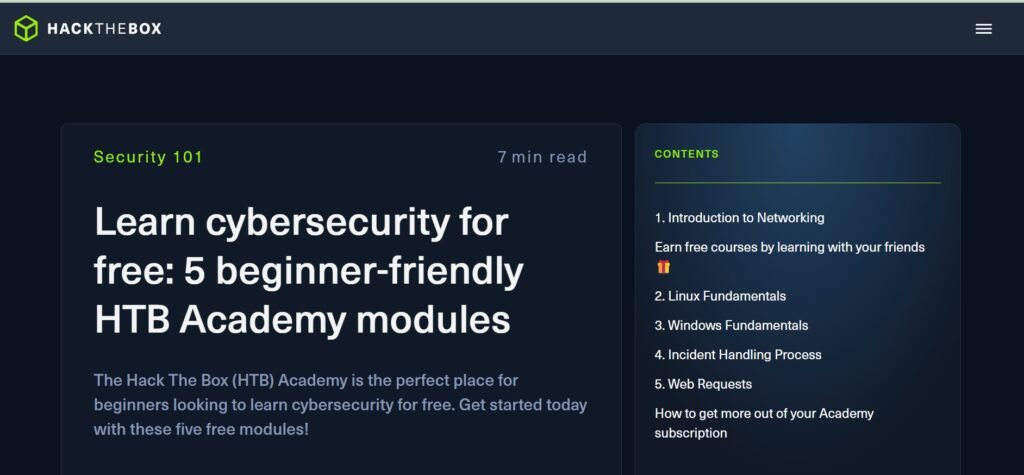
Hack The Box gives you the chance to solve problems that look much closer to what security professionals face at work. Instead of following detailed instructions, you’ll investigate systems, identify weaknesses, and figure out solutions on your own.
The platform offers beginner-friendly content alongside more difficult machines. You can start slowly and build your confidence one challenge at a time.
Hack The Box encourages critical thinking. Rather than memorizing commands, you learn why each step matters. That habit becomes valuable during interviews and real cybersecurity jobs.
Treat every completed machine like a small project. Keep notes about what you learned, the commands you used, and the mistakes you made. Those notes become a personal knowledge base that you’ll appreciate later.
That practical approach makes Hack The Box one of the strongest FREE resources to learn cybersecurity after you’ve mastered the basics.
As you continue building projects, you’ll eventually need a professional portfolio and resume. My guide on 6 Powerful Chat GPT Prompts to help reduce your workload can help you organize your work faster and present it professionally.
7. OverTheWire
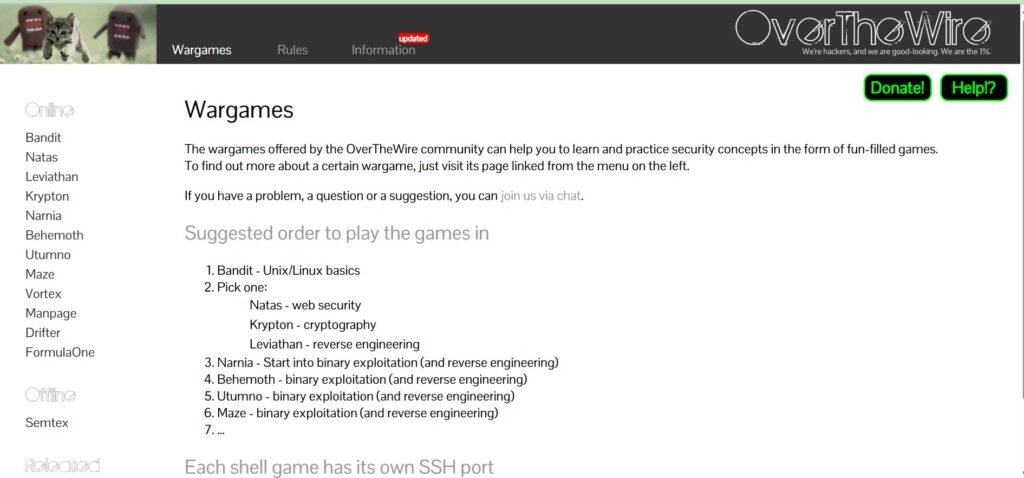
Most cybersecurity professionals spend time working inside Linux environments. Learning the operating system early makes many advanced topics much easier later. That’s where OverTheWire shines.
Instead of traditional lessons, the platform teaches through wargames. Each level presents a challenge that requires you to solve a small problem before moving forward. One of the most popular games is Bandit.
Bandit introduces Linux commands step by step. You’ll learn how to navigate folders, read files, search for information, manage permissions, and understand how systems work behind the scenes.
Because Linux appears in nearly every cybersecurity career, OverTheWire remains one of the smartest FREE resources to learn cybersecurity that beginners often overlook. A strong Linux foundation will make penetration testing, digital forensics, cloud security, and SOC work much easier later.
You’ll also benefit from 10 Skills AI can’t replace that you should be learning, especially the communication and analytical skills employers value.
8. CyberDefenders
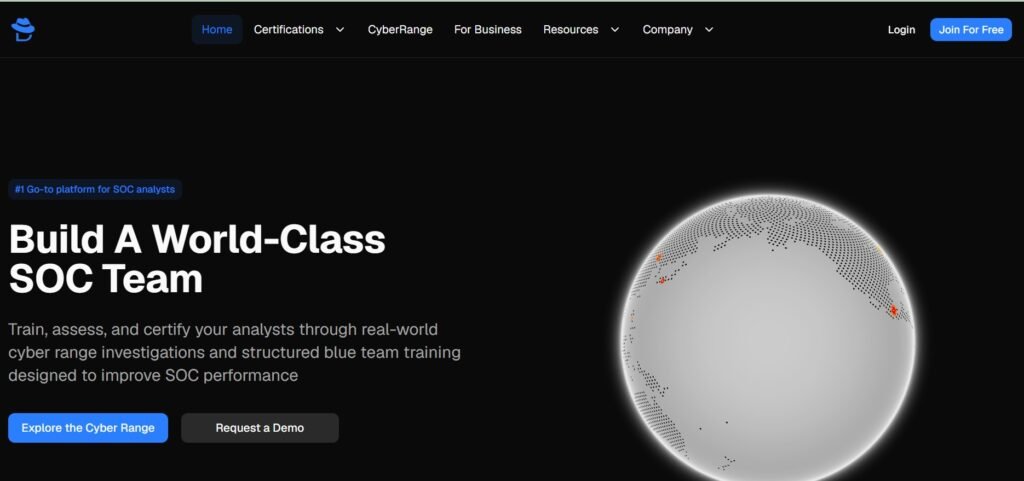
Many people hear the word cybersecurity and immediately think about hacking. However, the field is much broader than that. Thousands of professionals build careers defending organisations instead of attacking them.
CyberDefenders focuses on this defensive side of cybersecurity. The platform teaches you how Security Operations Centres, often called SOCs, investigate suspicious activity, analyse attacks, and respond to security incidents.
Instead of trying to break into systems, you can learn how to detect threats before they become serious problems. You can examine log files, identify malicious behaviour, investigate compromised systems, and practise thinking like a security analyst.
CyberDefenders also helps beginners understand how different security tools work together within an organisation. If you’re interested in blue team careers, the platform deserves a place among your regular learning resources. Its growing collection of practical exercises makes it a useful FREE resource for learning defensive cybersecurity.
Once you’re comfortable with cybersecurity concepts, you’ll probably begin applying for remote positions. My guide on 5 Lucrative Remote Skills you can learn in 2026 shows how cybersecurity fits into today’s remote job market.
FREE Certifications and Badges
9. ISC2 Certified in Cybersecurity (CC)
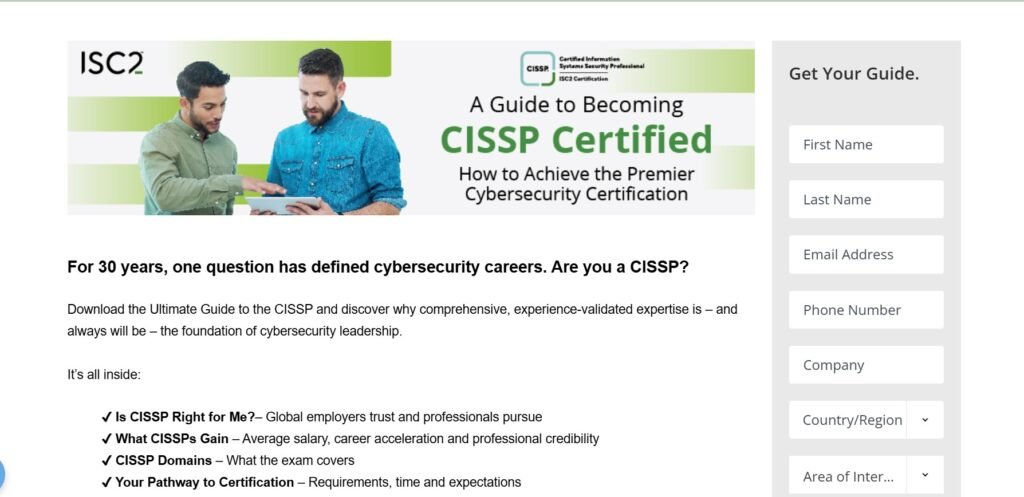
The ISC2 Certified in Cybersecurity certification, often called CC, has quickly become one of the best entry-level certifications for beginners.
ISC2 is one of the world’s most respected cybersecurity organizations. Many experienced professionals hold advanced ISC2 certifications throughout their careers.
The CC certification introduces security principles, business continuity, network security, access control, and risk management. Unlike many certifications, ISC2 frequently offers free training and promotional opportunities that include the exam for eligible learners.
That makes it an excellent starting point for beginners who want an industry-recognized credential. Among all the FREE resources to learn cybersecurity, this certification offers one of the biggest credibility boosts for new professionals.
Before applying for jobs, spend time improving your applications with 8 Powerful AI Prompts you can use for job search so your new certification receives the attention it deserves.
10. Microsoft Security Badges
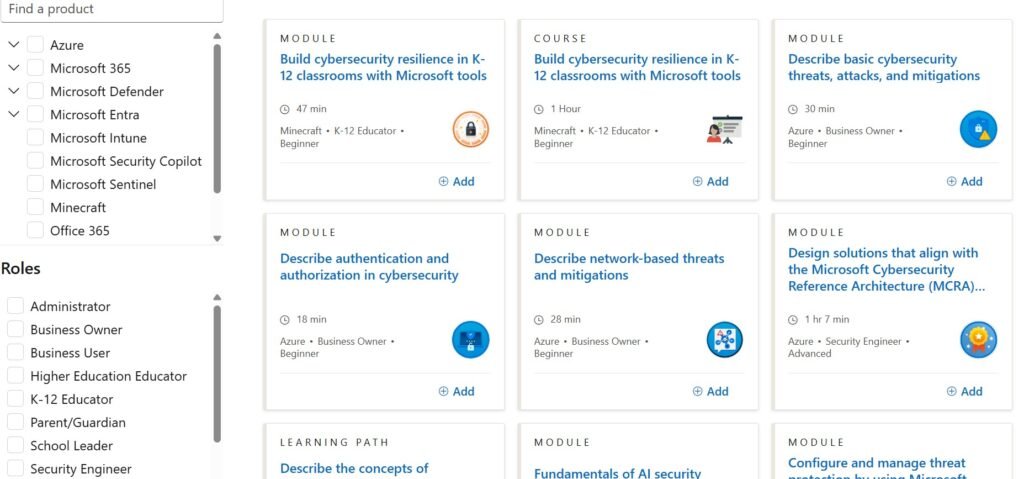
Microsoft Learn awards digital badges as you complete different learning paths. Each badge represents knowledge in a specific area, such as Microsoft Defender, Azure Security, identity management, cloud protection, or compliance.
Because the learning modules are short, you can steadily collect badges while improving your skills. These achievements can also motivate you to keep learning. Many learners add Microsoft badges to their LinkedIn profiles, allowing recruiters to see the technologies they have studied.
Cloud security continues to grow, making knowledge of Microsoft security tools increasingly relevant. The learning platform also updates its content regularly, helping you stay current as technology changes.
When combined with hands-on practice from TryHackMe and CyberDefenders, these badges can help you build a stronger beginner portfolio. That makes Microsoft Learn a practical FREE resource for anyone looking to learn cybersecurity.
By this point, you’ll have developed several valuable technical skills. The next step is learning how to present them confidently when employers ask about your experience.
11. IBM Digital Badges
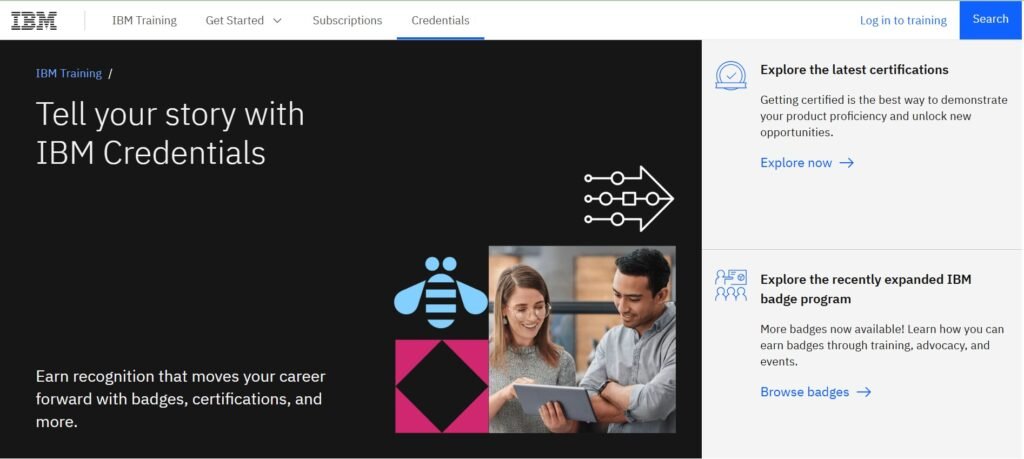
IBM doesn’t only provide free courses. It also rewards your progress with digital badges that you can display online. These badges show that you completed specific learning paths and developed practical knowledge in cybersecurity. While they are not professional certifications, they still help demonstrate that you take learning seriously.
Many employers search LinkedIn before inviting candidates for interviews. A profile with relevant badges often stands out more than one with nothing listed.
IBM offers badges in cybersecurity fundamentals, cloud technologies, data protection, artificial intelligence, and other technical subjects. As you complete more learning paths, your profile becomes stronger. Among all the FREE resources to learn cybersecurity, IBM Digital Badges provide one of the easiest ways to show continuous learning without spending money.
Your online presence matters just as much as your technical skills. After updating your LinkedIn profile, you can use 8 SMART ways to find clients on X (Twitter) and get hired FAST to start connecting with people looking for cybersecurity talent.
GitHub Repositories (Free Learning Gold)
12. Awesome Cybersecurity Resources
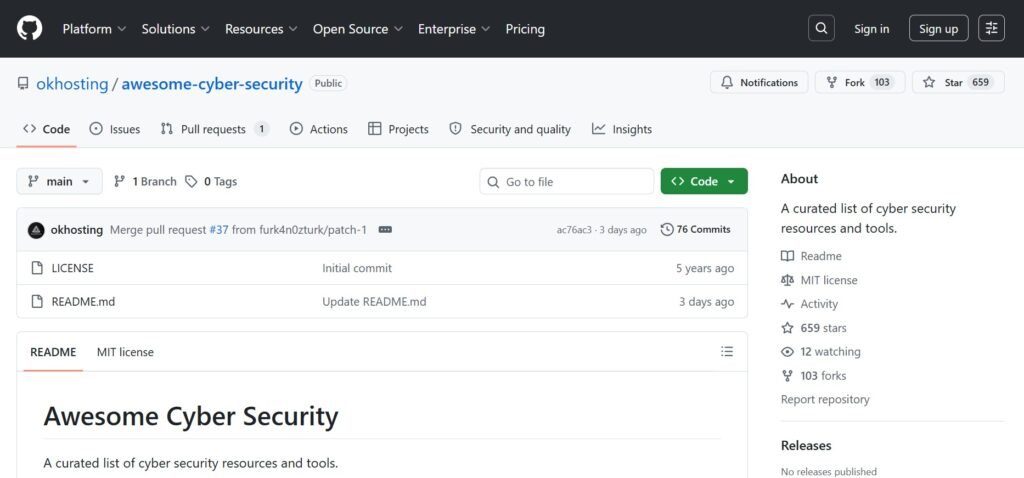
One website cannot teach everything about cybersecurity. Technology changes quickly, which means you’ll constantly discover new tools, tutorials, blogs, books, and practice platforms. That’s why this GitHub repository is so valuable.
Awesome Cybersecurity Resources collects hundreds of carefully selected learning materials into one organized place. Instead of spending hours searching online, you can explore trusted recommendations from experienced professionals.
The repository includes books, online courses, YouTube channels, podcasts, labs, cheat sheets, security tools, and documentation covering nearly every cybersecurity topic.
Think of this repository as your cybersecurity library. Whenever you finish learning one topic, you can return here to discover the next one. That makes it one of the most complete FREE resources to learn cybersecurity available on GitHub.
13. Cybersecurity Roadmap
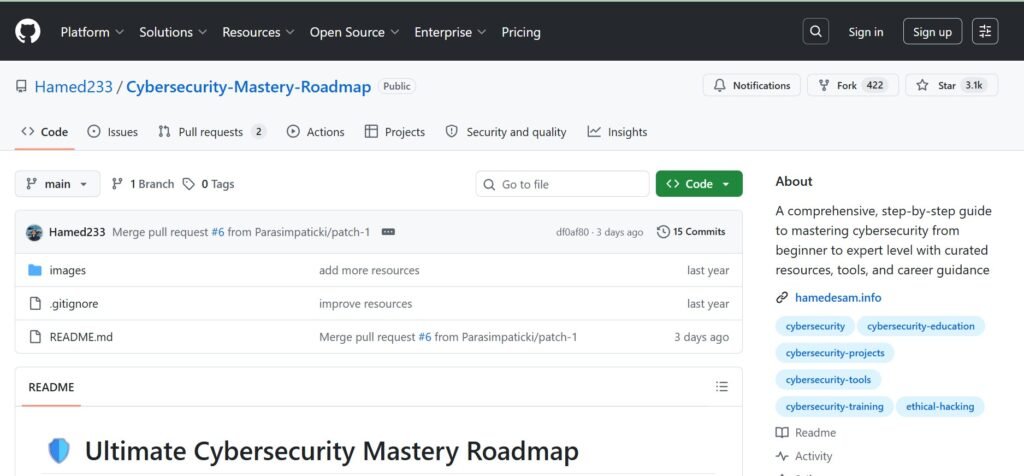
Many beginners quit because they don’t know what comes next. They finish one course, then spend days wondering which skill to learn afterward. A roadmap removes that uncertainty.
The Cybersecurity Roadmap repository breaks the learning journey into manageable stages. Instead of guessing your next step, you simply follow the path.
You’ll see how networking connects to operating systems, how Linux leads into scripting, and how those skills prepare you for security tools, cloud technologies, and specialized career paths.
Following a roadmap also prevents information overload. That’s why many learners consider it one of the smartest FREE resources to learn cybersecurity available online.
14. Blue Team Resources
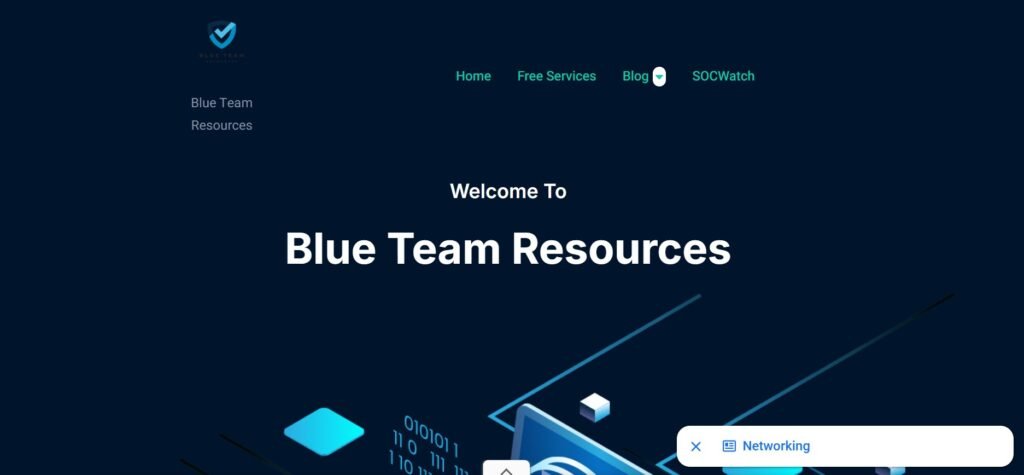
Not every cybersecurity professional becomes an ethical hacker. Many organizations need people who can detect attacks, investigate incidents, and protect company systems every day. Those professionals belong to the blue team. This GitHub repository focuses entirely on defensive cybersecurity.
Inside, you’ll find tools, learning materials, investigation guides, monitoring software, logging resources, threat intelligence platforms, and Security Operations Center references.
Instead of learning how to attack systems, you’ll learn how organizations defend themselves. Blue team careers continue growing because businesses need skilled defenders around the clock.
The repository also introduces many open-source security tools that professionals use daily. Exploring these tools helps you become familiar with real workplace environments before applying for your first cybersecurity job. You’ll return to it repeatedly as your skills develop.
Bookmark this: 10 Career Paths That Align With the Skills You Probably Already Have as a Teacher
For anyone interested in defensive security, this easily ranks among the most practical FREE resources to learn cybersecurity on GitHub.
Commuinites
15. Reddit – r/cybersecurity
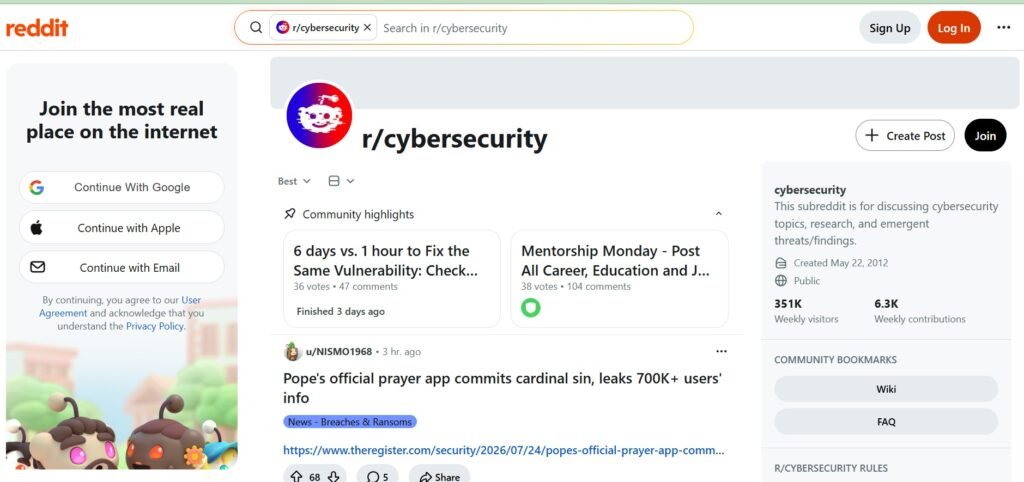
Joining a community may not seem important when you’re just starting. In reality, it can accelerate your learning more than another course.
The r/cybersecurity community includes professionals, students, hiring managers, researchers, and beginners from around the world. Members regularly discuss industry news, certification experiences, security incidents, career advice, interview preparation, and recommended learning resources. You’ll also discover common mistakes that beginners make and learn how experienced professionals solved similar challenges.
Many users share free webinars, conferences, training opportunities, and career advice that you might never find through a search engine. Among all the FREE resources to learn cybersecurity, this community helps you stay connected with the people already working in the field.
16. Discord Cybersecurity Servers
Search for:
- Cyber Mentors
- TryHackMe
- Hack The Box
Learning alone works. Learning with other people often works even better. Discord has become one of the largest meeting places for cybersecurity learners and professionals.
Many popular platforms operate official servers where members ask questions, share resources, discuss labs, and celebrate completed challenges. If you become stuck during a TryHackMe room, someone has probably faced the same issue before.
Cyber Mentor communities also organize study groups, live sessions, career discussions, and practical advice for beginners entering cybersecurity. Participating in these conversations builds confidence while introducing you to people who share your goals.
17. LinkedIn Cybersecurity Groups
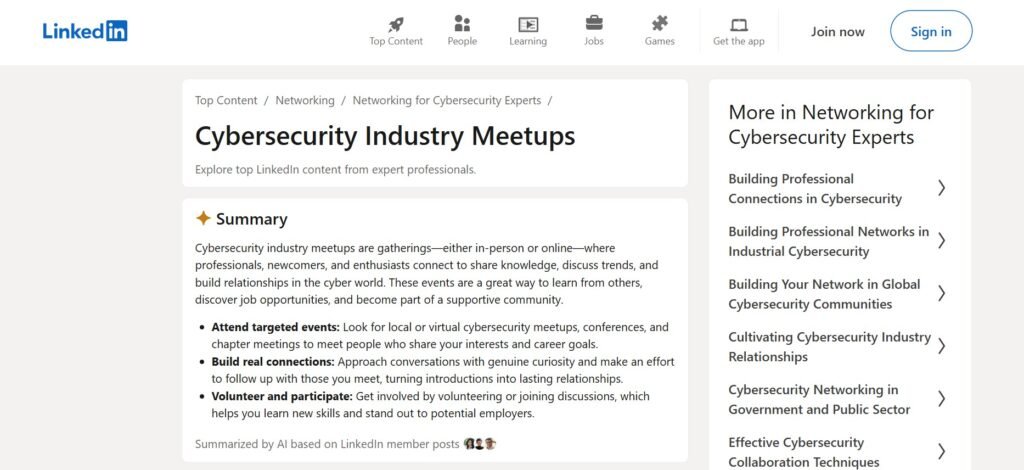
LinkedIn is much more than a place to upload your resume. It has become one of the best places to meet cybersecurity professionals, recruiters, hiring managers, and other learners. Joining cybersecurity groups allows you to follow industry conversations while learning what employers are looking for.
Many professionals regularly share free webinars, security reports, certification advice, and practical career tips.
I recommend following people who work in areas that interest you. If you want to become a SOC analyst, follow SOC analysts. If penetration testing interests you, connect with ethical hackers.
That makes LinkedIn one of the smartest FREE resources to learn cybersecurity because it supports both learning and career growth.
Pin this: 100 Hobbies That Will Turn Your Time Into Money
18. YouTube Cybersecurity Channels
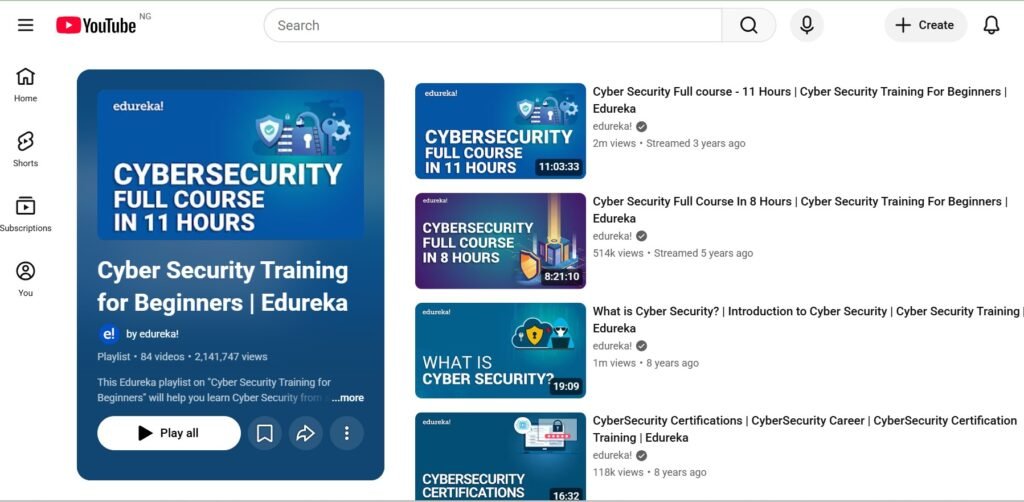
Sometimes you need someone to explain a topic in a different way. That’s where YouTube becomes incredibly useful. Thousands of cybersecurity professionals upload tutorials, walkthroughs, lab demonstrations, certification advice, and career guidance completely free. The key is following quality creators instead of randomly clicking videos.
Many respected instructors explain networking, Linux, ethical hacking, cloud security, malware analysis, and Security Operations Center workflows using real demonstrations.
Among all the FREE resources to learn cybersecurity, YouTube offers one of the largest collections of educational content available anywhere online.
If you’re building multiple digital skills, you may also enjoy 7 Websites to start learning video editing for FREE, especially if you’d like to create cybersecurity content in the future.
19. Security Blogs and News

Learning cybersecurity doesn’t stop after finishing courses. Professionals continue learning every day because new attacks and vulnerabilities constantly emerge.
Reading cybersecurity news helps you understand what’s happening in the real world. Instead of only learning theory, you’ll begin seeing how companies respond to ransomware attacks, phishing campaigns, cloud breaches, and software vulnerabilities.
Over time, many technical terms that once seemed confusing will become familiar. You’ll also start noticing patterns. Many attacks succeed because of simple mistakes rather than advanced hacking techniques.
Following security blogs can also prepare you for interviews. Recruiters may appreciate candidates who stay informed about current cybersecurity events. Adding trusted news sources to your daily routine makes them valuable FREE resources to learn cybersecurity throughout your career.
Recommended websites:
- Krebs on Security
- The Hacker News
- BleepingComputer
- SANS Internet Storm Center
20. CTFTime
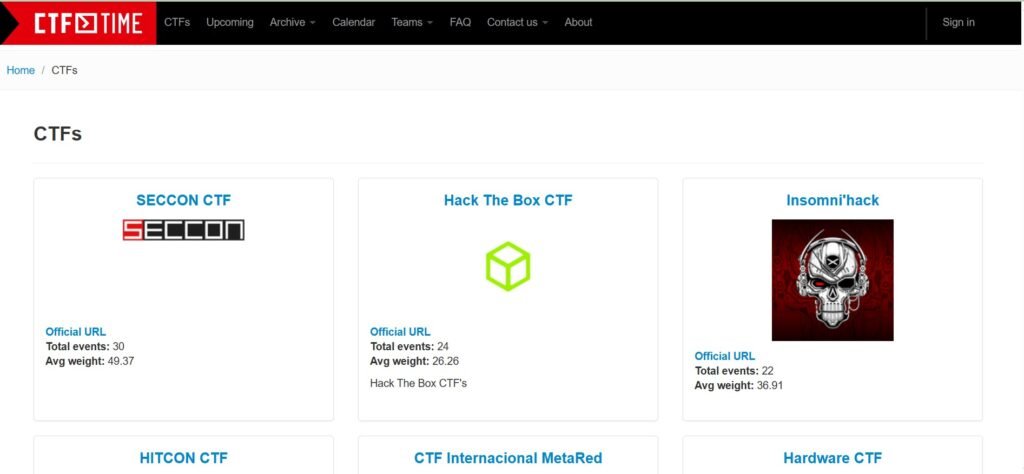
Eventually, you’ll want to test everything you’ve learned. Capture The Flag competitions give you an opportunity to put your cybersecurity skills into practice.
CTFTime lists cybersecurity competitions taking place around the world. Some challenges focus on cryptography, while others cover reverse engineering, web security, digital forensics, binary exploitation, and network analysis.
Beginners often assume these competitions are only for experts. However, many beginner-friendly events welcome first-time participants. You don’t need to solve every challenge to benefit from the experience.
You may find this helpful: 10 Things You Must Do Immediately After Applying For a Job (to avoid rejection)
Participating in CTFs can help you practise problem-solving and understand how different cybersecurity concepts work in real challenges. Some employers may also view CTF participation as evidence of curiosity, persistence, and practical problem-solving skills. That makes CTFTime an exciting FREE resource to learn cybersecurity once you’ve built your foundation.
Final Thoughts
Cybersecurity can feel like a huge field when you’re just getting started, but you don’t need to learn everything at once. Focus on building one skill at a time, practise consistently, and give yourself permission to learn at your own pace. Small daily improvements can lead to meaningful long-term progress.
The best part about these FREE resources to learn cybersecurity is that they complement one another. Courses teach the fundamentals, labs help you practise, certifications strengthen your CV, GitHub repositories support your learning, and communities keep you motivated when challenges become difficult. Together, they can create a complete learning path without requiring expensive bootcamps or university programmes.
Most importantly, don’t fall into the trap of collecting resources without using them. Choose one course today, complete it, move on to hands-on labs, and continue building from there.
As your confidence grows, you can start exploring internships, freelance projects, and junior cybersecurity roles. You can also specialise in areas such as cloud security, penetration testing, digital forensics, or threat intelligence. Every cybersecurity expert started as a beginner. Today is a great day to start your journey.







19 Comments