
10 Websites to Start Learning Project Management for FREE
Disclosure: Some of the links in this post are affiliate links. This means if you click on the link and purchase an item, I will receive an affiliate commission at no extra cost to you.
Project management can look complicated when every job description seems to demand experience, certifications, and knowledge of several tools. That pressure can make beginners assume they need an expensive course before they can even start. Fortunately, learning the foundations can happen without a large budget.
Free project management resources can introduce essential ideas such as planning, prioritization, Agile methods, roadmaps, scheduling, teamwork, and stakeholder communication. More importantly, practical lessons can help turn those concepts into skills that make sense outside a classroom.
The biggest challenge involves knowing where to begin. One platform may focus heavily on theory, while another may emphasize tools. Some resources work better for complete beginners, whereas others suit learners who already understand basic project workflows.
That is why this list focuses on websites that can help build a practical foundation step by step. You can explore beginner lessons, study real project scenarios, learn popular collaboration tools, and gradually become more comfortable with the responsibilities that project managers handle.
Project management also connects naturally with many remote careers. Administrative professionals, virtual assistants, operations specialists, and team coordinators can all benefit from stronger planning and organization skills. For a wider look at career-building options, 5 Lucrative Remote Skills You Can Learn in 2026 offers additional ideas.
The goal is not to collect certificates just for the sake of having them. The real goal involves understanding how projects move from an idea to a finished result.
10 Websites to Start Learning Project Management for FREE
1. OpenLearn by The Open University

OpenLearn gives beginners a practical place to explore project management without paying for traditional classes. The platform comes from The Open University, which gives the material a strong academic foundation.
Start with lessons that explain project lifecycles, planning, strategy, leadership, and decision-making. These topics matter because project management involves much more than moving tasks between columns.
A good project manager needs to understand why a project exists, what the team needs to accomplish, and how different activities connect. OpenLearn helps build that foundation before introducing more advanced ideas.
The platform works particularly well for someone who feels completely new to the field. Clear explanations make unfamiliar concepts easier to understand, while the self-paced structure allows room for repetition.
For people transitioning from administrative roles, the concepts can feel surprisingly familiar. Scheduling, organizing information, communicating deadlines, and coordinating people already form part of many professional routines.
That connection makes 10 Websites to Start Learning Project Management for FREE especially useful for career changers. The objective involves recognizing existing strengths while adding project-focused thinking.
Project management also fits naturally within remote work. Strong planning skills can support operations, virtual assistance, team coordination, and client services.
Professionals exploring broader opportunities can also read 6 FREE Websites That Gets You Hired FAST for additional ideas around finding work online.
Start here when the goal involves understanding project management fundamentals before worrying about advanced software.
2. freeCodeCamp

freeCodeCamp offers another useful starting point for people who prefer practical explanations and accessible learning materials.
Although many people associate the platform with coding, its educational content extends into areas related to Agile methods, workflow thinking, planning, and professional technology skills.
Project management requires an ability to understand processes. A project begins with a goal, moves through several stages, and requires clear decisions along the way.
That makes workflow thinking essential. Study lessons around Agile fundamentals and project workflows. Then, connect those ideas to a practical example. Imagine a small website project.
The team needs a clear goal, a timeline, defined responsibilities, milestones, and a way to track progress. Breaking that work into smaller stages creates a manageable workflow.
That exercise can make abstract concepts easier to understand. Dive into this next: 9 places people can find remote clients immediately (that nobody is talking about)
The broader advantage of 10 Websites to Start Learning Project Management for FREE involves having different teaching styles available. Some people prefer formal lessons, while others understand ideas faster through practical examples. FreeCodeCamp works well for independent learners who enjoy experimenting as they learn.
The platform can also complement technical development. Project managers working with digital teams benefit from understanding how technical workflows operate.
Professionals interested in technology careers can explore 10 FREE AI Courses With Certificates You Should Take Today alongside project management learning.
AI knowledge can become particularly useful when project teams use automation, research tools, documentation systems, or AI-assisted workflows.
The goal remains practical understanding. Learn a concept. Apply it to a small project. Then review what worked. That approach creates stronger retention than collecting course completion badges without applying the material.
3. Atlassian University

Atlassian University offers valuable training around tools that many modern teams use to organize projects and workflows. Popular Atlassian products include Jira and Trello. Understanding these platforms can help beginners connect project management concepts with actual workplace systems.
The learning material covers areas such as Agile project management, collaboration, roadmaps, and sprint planning. That combination makes the platform particularly useful for people targeting technology companies, software teams, digital agencies, and remote organizations. Agile thinking deserves special attention.
Want more like this? Start here: 10 APPS that teaches tech skills for FREE
Instead of planning every detail for a long period, teams can organize work into manageable cycles. They review progress regularly and adjust priorities when circumstances change. That approach can help project managers respond to changing client needs.
Suppose a team launches a new digital product. The original plan may look perfect during the first week. Customer feedback can then reveal a problem. Agile methods allow the team to reconsider priorities rather than blindly follow an outdated plan.
That flexibility creates practical value. The same thinking can strengthen administrative work. A virtual assistant coordinating several recurring projects can use similar principles for planning, tracking, and reviewing tasks.
Additional remote-work resources can support this career direction. 12 Websites to Start Learning Project Management for FREE can help expand the learning roadmap.
Atlassian University becomes especially useful once basic project concepts already make sense. It links theory with familiar workplace software.
4. Product School Resources

This School provides articles, templates, webinars, and practical material focused on product management and related professional skills.
Product management overlaps with project management but focuses on different responsibilities. Understanding the connection can help aspiring project professionals develop stronger business awareness.
Product managers think about user needs, product direction, priorities, and business goals. Project managers concentrate heavily on execution, timelines, resources, coordination, and delivery. Learning both perspectives can strengthen decision-making.
Product School resources can introduce frameworks that explain how professionals prioritize work, manage roadmaps, coordinate teams, and communicate decisions.
Those lessons can improve more than technical knowledge. They can improve judgment. Suppose a team has ten possible tasks but only enough time to complete four. A strong project manager needs a method for deciding what deserves immediate attention.
Prioritization frameworks provide that structure. Communication also matters. A project can have an excellent plan and still struggle because team members interpret priorities differently. Clear documentation and regular communication help keep everyone aligned.
That makes professional writing another useful skill. Professionals can explore 8 Powerful AI Prompts You Can Use for Job Search to improve job-search workflows while developing project management abilities.
AI can help organize research and draft repetitive materials, but project decisions still require human judgment. Product School works well for learners who want to understand the business side behind project work. It can also help someone decide if product management deserves further exploration as a career direction.
5. ProjectManager Learning Hub

ProjectManager provides free learning resources around planning, scheduling, resource management, and project execution. The material can help beginners understand how project managers approach real workplace scenarios.
That practical angle matters because project management involves more than terminology. A project manager may need to track deadlines, coordinate several contributors, identify delays, communicate changes, and adjust resources.
Those activities require organization. They also require anticipation. A good project manager notices potential problems before they become major problems.
Imagine a marketing campaign with a launch date approaching. The designer needs final copy, the writer still waits for approvals, and the client has not confirmed the final visuals.
A project manager sees the dependencies immediately. Without coordination, each person may continue working independently while the deadline approaches. With proper planning, the dependencies become visible.
That is why 10 Websites to Start Learning Project Management for FREE should include resources that explain practical scenarios rather than theory alone. ProjectManager can help build that practical mindset.
For professionals moving toward remote coordination roles, software knowledge also matters. 9 FREE AI Tools Every Remote Worker Should Have in 2026 can introduce productivity tools that support remote workflows.
AI does not replace project judgment, but it can reduce time spent on repetitive work. The strongest combination involves planning skills, communication, organization, and smart tool usage. ProjectManager provides a useful bridge between those areas.
6. HubSpot Academy

HubSpot Academy can help learners understand the connection between project management, business processes, customer relationships, and team workflows.
Its learning library includes material related to product operations, process management, marketing, sales, customer experience, and business systems.
That wider business context matters because projects rarely exist in isolation. A marketing project can affect sales, a product project can influence customers, and an internal operations project can affect employees and everyday business processes.
Understanding these relationships can help project managers make more informed decisions. It also encourages them to consider how their work connects with other teams rather than focusing only on individual tasks and deadlines.
HubSpot can also provide exposure to CRM workflows. A project manager may need to coordinate campaigns, maintain records, manage deadlines, or monitor customer-related processes. These responsibilities can benefit from strong organisational and systems-thinking skills.
Someone who enjoys organisation can apply these concepts across several career paths. Project coordination can lead to operations support, while operations experience can provide a foundation for programme coordination. Marketing project experience can also support campaign management, while customer-focused work can lead towards customer success operations.
Professionals can strengthen these skills by developing their spreadsheet knowledge through 9 Websites That Teach You EXCEL Courses for FREE. Excel remains useful for budgets, schedules, trackers, reports, resource planning, and project data.
The broader purpose of [10 Websites to Start Learning Project Management for FREE] is to help you discover resources that support real workplace responsibilities. HubSpot Academy fits this goal by combining business knowledge with operational thinking.
Learning these concepts can also help you understand how project work connects with revenue, customers, internal processes, and wider business goals. That broader perspective can make project management skills more useful across different roles and industries.
7. Coursera

Coursera offers a large collection of project management courses and learning materials from universities, professional organisations, and companies. Some courses may provide access to learning materials through audit options or free enrolment opportunities, while certificates and certain features may require payment.
Check the specific course before enrolling because access terms can vary. You can search for topics such as project management, Agile, product strategy, Scrum, stakeholder management, and project planning.
The platform can be particularly useful when you prefer structured learning. A well-organised course can introduce concepts in a logical sequence, making it easier to understand how different parts of project management connect.
Someone interested in data-driven project work can also explore 12 Websites to Start Learning Project Management for FREE and compare different learning options.
Coursera can also complement other digital skills because project managers often work with technical teams, analysts, designers, marketers, and developers. Understanding the basic language and processes used by these professionals can make collaboration easier.
You do not need to become an expert in every discipline. However, having a basic understanding of related functions can help you set realistic expectations, communicate with specialists, and understand how their work contributes to the wider project.
People interested in related data careers can also read 10 Websites to Learn Data Entry for FREE With Certificates and explore how data-focused work connects with project operations.
The strongest learning approach combines structured courses with practical exercises. Study a concept, then apply it by creating a sample project. This process can help turn theoretical knowledge into practical skills that you can demonstrate in your portfolio.
8. LinkedIn Learning

LinkedIn Learning can offer short, beginner-friendly lessons that introduce project management concepts without requiring hours of reading. Topics can include Agile, project roadmaps, stakeholder management, team communication, scheduling, and productivity.
The platform can work particularly well for people who prefer shorter lessons. Breaking your learning into smaller sessions can make it easier to stay consistent, especially when you are balancing work or other responsibilities.
For example, one session could focus on stakeholder communication, while another covers project scheduling. A later lesson might explain how to manage changing priorities. This approach allows busy professionals to develop their knowledge gradually without trying to complete everything at once.
LinkedIn Learning can also connect completed courses with your professional profile. However, certificates should support practical competence rather than replace it. Employers and clients still need evidence that you can organise work, communicate clearly, track deadlines, and solve problems.
That is why practice remains essential. After completing several lessons, create a mock project and apply what you have learned. Define the goal, write a project scope, create a task list, assign deadlines, identify dependencies, and track progress.
Then, review the completed workflow and consider what you would improve. This gives you practical experience with the same types of activities involved in project coordination.
Professionals strengthening their digital careers can also explore 10 Skills AI Can’t Replace That You Should Be Learning. Project management relies heavily on communication, judgement, coordination, and problem-solving, making these skills particularly useful when teams work remotely.
The broader goal of 10 Websites to Start Learning Project Management for FREE is not simply to complete lessons. Use each resource to build practical knowledge, practise what you learn, and develop confidence in managing real workplace responsibilities.
9. ProductPlan Blog and Guides
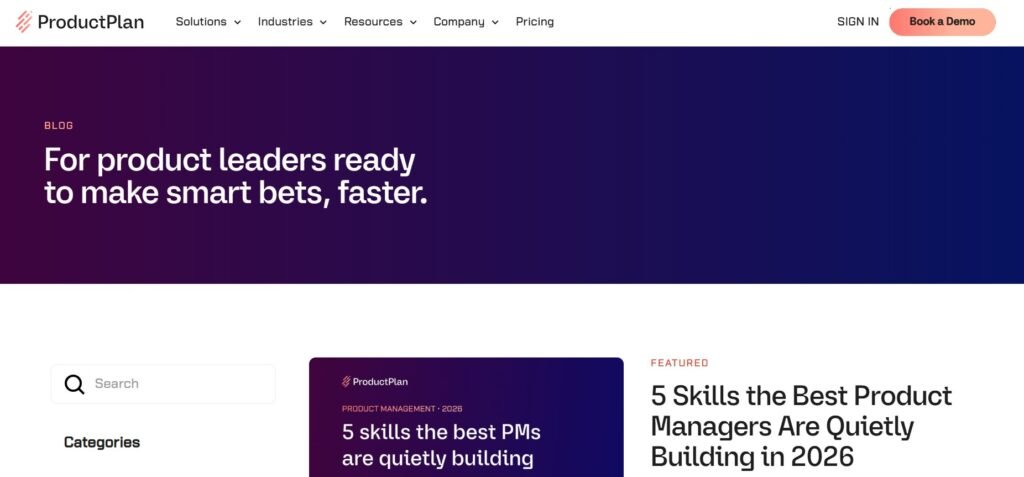
ProductPlan provides resources focused on product roadmaps, prioritisation, strategy, templates, and planning frameworks. These resources can help beginners understand how teams plan work, organise priorities, and communicate long-term direction.
Roadmapping is an important project management skill because teams need a clear view of where their work is heading. A roadmap can outline major goals, priorities, initiatives, and expected timelines, giving everyone a shared understanding of what the team plans to accomplish.
However, a roadmap should not become a rigid promise. Business needs can change, customer feedback can shift priorities, and technical problems can affect delivery dates. Strong planning therefore leaves enough room for teams to adjust when circumstances change.
ProductPlan’s resources can help beginners understand how experienced professionals approach these decisions. Prioritisation also deserves serious attention because not every task has the same level of urgency or impact.
Some activities directly support the main business goal, while others may provide value later. A good project manager needs to distinguish between these activities and allocate attention accordingly.
This skill can transfer across different industries. A teacher coordinating an educational programme can prioritise curriculum milestones, while an event coordinator may focus first on venue deadlines and vendor confirmations. A virtual assistant can also prioritise client requests based on urgency and business impact.
Professionals interested in expanding their administrative capabilities can explore 10 Things You Must Do Immediately After Applying for a Job for broader career strategies.
ProductPlan can be particularly useful for learners who are ready to think beyond individual tasks. The focus shifts towards strategy, sequencing, priorities, and long-term direction.
Developing this perspective can help you understand the difference between simply managing tasks and coordinating work towards broader project goals.
10. Medium Product Management Collections
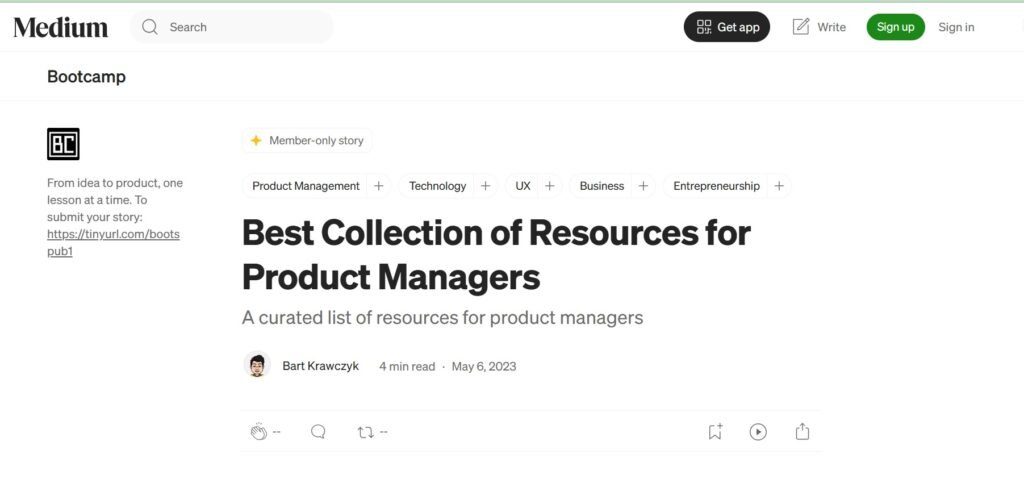
Medium can provide another layer of learning through articles, case studies, professional experiences, and practical frameworks. However, the quality can vary between writers, so critical reading is important. Look for experienced practitioners who explain how teams handled real product and project challenges, as case studies can reveal details that textbooks sometimes overlook.
A project may have started with one goal but changed after customer feedback. The team may have faced staffing challenges, a deadline may have shifted, or stakeholders may have disagreed about priorities. These situations can teach valuable lessons about judgment, communication, adaptability, and decision-making.
Medium can also help learners follow current conversations around product management, remote teams, Agile practices, and technology. However, readers should avoid treating every article as authoritative. Compare ideas across multiple credible sources, check whether examples provide enough context, and separate personal opinions from established practices. This approach can strengthen analytical thinking.
Professionals interested in complementary digital skills can also explore 7 Websites to Start Learning Video Editing for FREE, especially when project work involves content production or marketing teams. Another useful area is graphic communication. 10 Websites to Start Learning Graphic Designs for FREE can help learners understand the basics of working with design teams.
The goal is not to master every related discipline. Instead, broader knowledge can make collaboration smoother and help professionals communicate more effectively with people in different roles.
How to Learn Project Management Without Getting Overwhelmed
Using 10 Websites to Start Learning Project Management for FREE does not mean opening ten browser tabs and attempting every resource at once. That approach can quickly create confusion and make learning feel more difficult than it needs to be.
Choose one starting point, complete a small section, and practise the concept before moving to another resource. A simple progression can provide structure and make it easier to build knowledge gradually.
Stage One: Learn project fundamentals and understand the basic principles of project management.
Stage Two: Study Agile principles and learn how teams use them to organise work.
Stage Three: Practise scheduling, prioritisation, and basic project planning.
Stage Four: Learn how to use at least one project management tool.
Stage Five: Create a practice project that allows you to apply what you have learned.
Stage Six: Document the results and turn the exercise into evidence of your practical skills.
A beginner can create a mock project around something familiar. For example, imagine launching a fictional online workshop. Define the objective, create milestones, list the required tasks, assign deadlines, identify dependencies, and create a communication plan. You can then track the project’s progress and review what worked.
This exercise can reveal how project management concepts operate in practice. Professionals who already have administrative experience can also adapt familiar responsibilities into project examples. Calendar management can become scheduling practice, email coordination can become stakeholder communication practice, event planning can become project planning, and team coordination can become resource management practice.
For people building a remote career, 8 SMART Ways to Find Clients on X (Twitter) and Get Hired FAST can help connect newly developed skills with potential opportunities.
What Skills Should a Beginner Focus On First?
Project management contains many skills, but beginners can start with a smaller core. Building strength in these areas can create a useful foundation before moving into more advanced concepts.
Planning
Planning involves defining the goal, identifying tasks, setting deadlines, and understanding dependencies. A strong plan gives the team direction and helps everyone understand what needs to happen and when.
Communication
Project managers communicate with clients, team members, executives, vendors, and other stakeholders. Clear communication helps reduce confusion and ensures that important information reaches the right people.
Organization
Project information can spread across emails, documents, spreadsheets, meetings, and project management software. Keeping these details organised helps protect deadlines, improve visibility, and reduce avoidable mistakes.
Prioritization
Projects often contain more tasks than the available time allows. Prioritisation helps teams determine which activities require attention first and which can wait.
Problem-Solving
Unexpected problems can appear during any project. A project manager needs to identify the issue, consider the available options, and choose a practical response based on the project’s needs.
Tool Proficiency
Project management tools help teams organise work, track progress, and manage information. However, software knowledge should support project thinking rather than replace it. Understanding why a task needs to be completed is just as important as knowing which button to use.
These skills can complement other remote abilities. 5 Lucrative Remote Skills You Can Learn in 2026 provides additional ideas for building a flexible digital career.
Do Project Management Skills Require Certification?
Certification can add value in certain situations, but beginners should avoid treating certificates as the only measure of competence. Understanding project lifecycles, prioritisation, communication, and practical execution remains important.
A certificate may strengthen a professional profile, but actual ability still needs evidence. A stronger approach involves combining structured learning with practical examples that show how knowledge can be applied.
Create a project plan, build a simple roadmap, develop a task board, write meeting notes, create a risk register, and prepare a project status report. These examples can demonstrate practical thinking during interviews, freelance conversations, or applications for entry-level project roles.
Professionals can also strengthen their communication and productivity skills through 6 Powerful Chat GPT Prompts to Help Reduce Your Workload. AI can assist with repetitive documentation, brainstorming, and formatting, but human oversight remains important when project details affect clients, budgets, deadlines, or strategic decisions.
How Project Management Can Support Remote Work
Project management fits naturally into remote environments because distributed teams need strong systems for coordinating work. Team members may work across different locations and time zones, while meetings cannot cover every detail. Tasks need clear ownership, deadlines need visibility, and documentation needs to remain consistent.
These requirements make project coordination particularly important. Someone with project management skills may pursue roles such as project coordinator, operations assistant, implementation coordinator, client success coordinator, or junior project manager.
Administrative professionals can also use these skills to move towards higher-value responsibilities. The progression can happen gradually by starting with task coordination, adding deadline management, learning project software, practising reporting, developing stakeholder communication, and eventually taking on more complex projects.
For people exploring customer-facing careers, 10 FREE Customer Service Courses can complement project coordination skills because many projects involve regular customer communication. Combining these abilities can create greater versatility across different remote roles.
Build a Portfolio While Learning
A project management portfolio can contain practical examples instead of traditional design work. You can create a project charter, build a roadmap, develop a task board, create a project timeline, write a risk register, prepare a weekly status update, and develop a simple communication plan.
These examples can demonstrate how you approach planning and coordination. A fictional project can work perfectly well for practice as long as it is clearly labelled as a mock or fictional project.
For example, create a fictional product launch for a small ecommerce company. The project could involve a six-week timeline and a team consisting of a writer, designer, developer, and marketer. Its milestones could include research, copywriting, design, development, testing, and launch, while potential risks could include delayed approvals, technical issues, and missing content.
This type of project demonstrates planning, coordination, communication, and risk awareness. It can also provide useful portfolio material when applying for relevant opportunities.
Professionals interested in building stronger digital-income opportunities can explore How to Make Your Current Skill More Valuable and Make Money. The same principle applies to project management because existing organisational abilities can become more valuable when they are connected to clear business outcomes.
Create a Simple Learning Schedule
Learning project management becomes easier when the process fits into an existing routine. A four-week structure can provide direction without making the learning process feel overwhelming.
Week One: Fundamentals
Focus on project lifecycles, goals, stakeholders, scope, and basic planning. Use OpenLearn and freeCodeCamp to develop an understanding of the fundamentals.
Week Two: Agile and Collaboration
Study Agile principles, roadmaps, sprints, teamwork, and prioritisation. Atlassian University and Product School can provide resources for this stage.
Week Three: Tools and Execution
Explore project software, task management, resource planning, and workflows. ProjectManager and HubSpot Academy can support this stage of practical learning.
Week Four: Strategy and Practice
Study roadmaps, case studies, stakeholder management, and professional examples. Coursera, LinkedIn Learning, ProductPlan, and Medium can provide additional perspectives.
After completing these stages, create a project from start to finish. This approach gives 10 Websites to Start Learning Project Management for FREE a clear structure instead of turning the list into an endless collection of resources.
Consistency matters more than speed. The goal is to build understanding, practise the concepts, and gradually develop evidence of what you can do.
Common Mistakes to Avoid While Learning Project Management
One common mistake is consuming information without practising. Another is jumping between too many platforms at once. Some beginners also spend most of their time learning software while overlooking communication, planning, and decision-making.
This can create an incomplete skill set because project management depends on people as much as tools. Another mistake is chasing every certificate available. Certificates can support credibility, but practical examples show how knowledge is applied.
A better approach involves building a balanced foundation. Learn the concepts, practise the workflows, understand the tools, create sample projects, document the work, and then apply for suitable roles.
People interested in strengthening other professional materials can also explore 10 Powerful Chat GPT Prompts to Help You Rewrite Your Resume. A strong CV should highlight relevant project experience, measurable outcomes, tools, and transferable abilities.
Final Thoughts
These 10 Websites to Start Learning Project Management for FREE provide different ways to approach the same professional goal. OpenLearn builds foundational understanding, while freeCodeCamp supports practical and accessible learning. Atlassian University connects Agile principles with workplace tools, and Product School introduces product strategy and prioritisation.
ProjectManager focuses on practical project execution, while HubSpot Academy adds business and operational context. Coursera provides structured academic and professional learning, and LinkedIn Learning offers shorter lessons that can fit into a busy schedule. ProductPlan strengthens roadmap and prioritisation knowledge, while Medium adds case studies, professional perspectives, and industry discussions.
The strongest results come from combining these resources with practical application. Learning alone cannot demonstrate project ability, but a mock project, clear roadmap, project tracker, status report, or well-organised timeline can provide evidence that the concepts have moved beyond theory.
Project management can also provide a flexible foundation for remote careers. These skills can support work in operations, administration, customer success, digital marketing, technology teams, and other professional environments.
For people interested in broader online opportunities, 25 FREE Platforms to Learn Skills That Pay in 2026 can provide more directions for skill development.
The best approach starts small. Choose one resource, study one concept, practise one workflow, and create one project before repeating the process. This method turns 10 Websites to Start Learning Project Management for FREE from a simple list into a practical career-building roadmap.
Project management is ultimately about helping people move from plans to results. Strong organisation supports that journey, clear communication keeps everyone aligned, good prioritisation protects time, and problem-solving helps keep projects moving. Tool knowledge makes the workflow easier to manage, while the combination of these abilities can create a valuable professional foundation without requiring a large upfront investment.