

12 FREE Websites to Learn Data Analysis in 2026
Data has become part of almost every modern workplace. Companies use numbers to understand customers, track performance, manage costs, and make better decisions. That demand creates exciting opportunities for people who want practical digital skills without spending thousands on training.
You do not need to become a math expert before starting. Instead, you need curiosity, patience, and a willingness to practice with real data. You can begin with spreadsheets, then move into visualization, databases, statistics, or programming as your confidence grows.
The biggest challenge often involves finding learning platforms that explain data analysis clearly. Fortunately, several websites offer free lessons, tutorials, projects, and practical exercises for beginners. Some focus on Excel and Google Sheets, while others introduce SQL, Python, Tableau, Power BI, and statistical thinking.
These resources can help you build skills for entry-level analytics roles, remote jobs, freelance projects, and business support positions. Moreover, data analysis can complement many careers because professionals in marketing, finance, operations, customer service, and administration all work with information.
As you build your technical abilities, you should also pay attention to things you MUST include in your Resume, especially evidence that demonstrates your new skills. 9 Websites That Teach You EXCEL Courses for FREE can also help you strengthen one of the most useful foundations for learning data analysis.
You do not need to master everything at once. Choose one platform, complete the lessons, practice with sample datasets, and gradually build projects that show what you can do.
Why You Should Start With Free Data Analysis Resources
Many beginners spend money on courses before testing their interest in data.
That approach can create unnecessary pressure. You can explore the field first without paying for expensive training.
These 12 FREE Websites to Learn Data Analysis in 2026 provide different learning styles and skill levels.
Some platforms focus on practical projects. Others build your statistics knowledge before introducing technical tools.
That difference matters because data analysis involves several connected skills. You need to understand numbers, clean information, find patterns, and explain results.
You also need tools such as Excel, SQL, Python, Tableau, or Power BI.
However, you do not need all those tools immediately. Start with one foundation, then build gradually.
A strong data analyst also needs communication skills. You must explain findings clearly to people who may not understand technical terms.
That is why 5 Lucrative Remote Skills You Can Learn in 2026 can complement your analytics journey.
Now, let’s look at the websites that can help you get started.
12 FREE Websites to Learn Data Analysis in 2026
1. Kaggle Learn
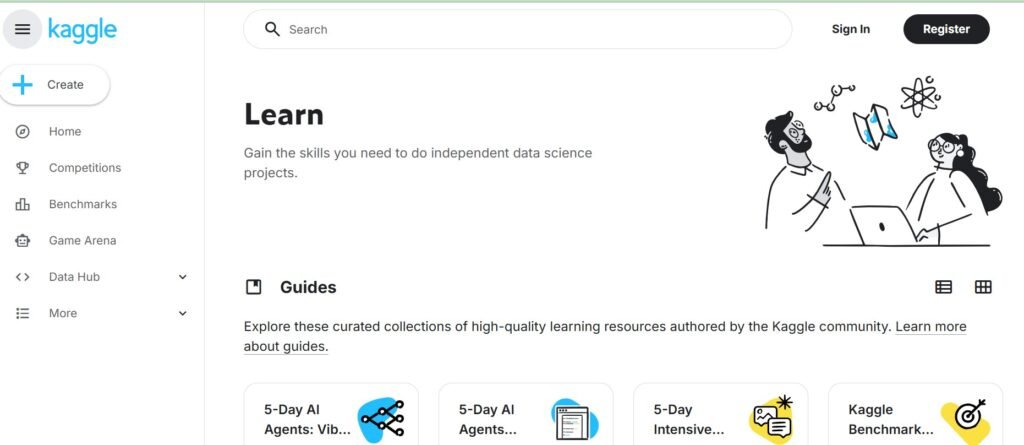
Kaggle Learn gives beginners a practical way to study data analysis.
The platform combines short lessons with exercises and real datasets.
You can learn Python, data cleaning, visualization, and other important analytics concepts.
The practical approach makes Kaggle especially useful for people who dislike purely theoretical courses.
You can write code directly inside the learning environment.
That means you practice immediately instead of watching lessons for hours.
Kaggle also gives you access to datasets from different industries.
You can explore information about sales, health, entertainment, sports, and technology.
Those datasets can eventually become portfolio projects.
That advantage makes Kaggle one of the strongest 12 FREE Websites to Learn Data Analysis in 2026.
Start with beginner Python lessons if programming feels unfamiliar.
Then move into data manipulation and visualization.
Keep your early projects simple.
Analyze a small dataset and explain three useful findings.
That exercise builds both technical and communication skills.
For additional technical learning options, 10 APPS That Teach Tech Skills for FREE can help you explore other digital skills.
2. freeCodeCamp
freeCodeCamp offers a completely free curriculum for people who want technical data skills.
The platform covers Python, SQL, databases, and related technologies.
You also get practical projects throughout the learning process.
Those projects give you opportunities to apply concepts instead of memorizing definitions.
SQL deserves special attention because companies use databases across many departments.
You may need SQL to retrieve customer records.
You could also use it to analyze transactions or identify trends.
Python adds another layer of flexibility.
You can use Python for cleaning data, analysis, automation, and visualization.
freeCodeCamp works especially well for learners who enjoy hands-on practice.
The platform also provides certifications for completed learning paths.
Those certificates can strengthen your profile when you start applying for opportunities.
Still, practical projects matter more than certificates alone.
Build examples that demonstrate what you can actually do.
Then explain your process clearly.
For broader career preparation, explore 6 FREE Websites That Gets You Hired FAST after developing your first few projects.
3. Google Data Analytics on Coursera
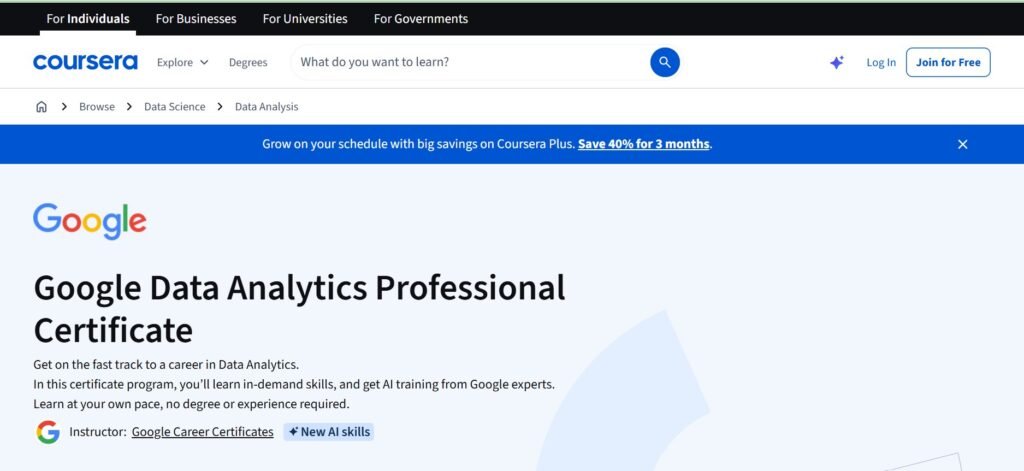
The Google Data Analytics Professional Certificate provides a structured introduction to professional analytics.
You can access course content through Coursera’s available learning options.
The program introduces Excel, SQL, data cleaning, visualization, and analytical thinking.
That combination closely reflects common workplace workflows.
You also learn how analysts approach business questions.
The course does not treat data analysis as simple number crunching.
Instead, it emphasizes asking useful questions and finding evidence.
That mindset matters when working with real organizations.
You may eventually analyze customer behavior.
Another project could involve marketing performance.
A different role might involve operational data.
The underlying process stays similar.
You define the question, gather information, clean the data, analyze patterns, and communicate the findings.
This structured pathway makes the Google program attractive for beginners.
You can follow the lessons in sequence instead of jumping between unrelated tutorials.
If you need additional learning resources, 25 FREE Platforms to Learn Skills That Pay in 2026 provides more options.
4. Microsoft Learn

Microsoft Learn provides official training for Excel, Power BI, and other Microsoft tools.
Those tools appear frequently in business environments.
Excel remains useful for spreadsheets, calculations, reporting, and basic analysis.
Power BI adds interactive dashboards and business intelligence capabilities.
You can start with Excel fundamentals.
Learn formulas and data organization first.
Then practice sorting, filtering, and cleaning information.
After that, explore Power BI.
You can create dashboards that turn raw information into visual reports.
Those dashboards can help managers understand trends quickly.
Microsoft Learn also provides structured modules that guide you through specific topics.
The platform can therefore support beginners and more advanced learners.
Learning official tools directly from Microsoft can also help you understand current workplace workflows.
If you want stronger spreadsheet skills, 9 Websites That Teach You EXCEL Courses for FREE offers additional options.
You can then combine Excel knowledge with Power BI for a stronger analytics foundation.
5. Harvard Online Courses
Harvard provides online courses that explore statistics, probability, and data-related concepts.
You can access some course materials through free learning options.
This resource works particularly well for people who want deeper theoretical understanding.
Statistics helps you understand what your data actually means.
Without that foundation, charts can easily mislead you.
For example, two datasets may show similar averages while revealing very different patterns.
Statistics helps you identify those differences.
Probability also matters when you evaluate uncertainty.
These concepts become useful when you work with forecasts, experiments, and business decisions.
Harvard’s courses can therefore strengthen the thinking behind your analysis.
Do not worry if the material feels difficult initially.
Work through the lessons slowly.
Take notes on concepts you struggle to understand.
Then practice with simple datasets.
For people who want broader quantitative skills, 20 FREE Resources to Learn Cybersecurity provides another technology-focused learning path.
6. MIT OpenCourseWare
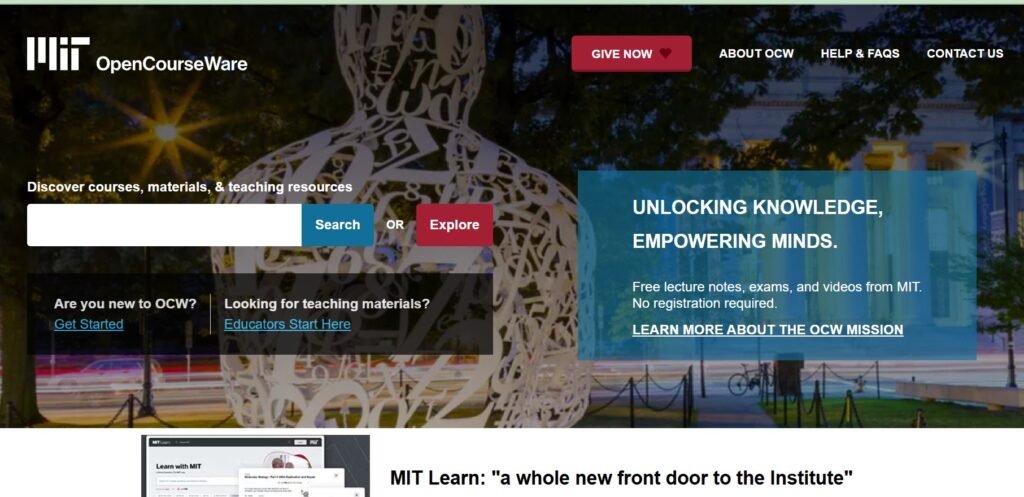
MIT OpenCourseWare offers advanced academic material for learners who want deeper technical knowledge.
You can find resources involving statistics, probability, algorithms, and data science.
This platform works best after you understand the basics.
The material can introduce mathematical concepts behind analytical methods.
You may study algorithms and explore how computational processes work.
That knowledge can improve your technical reasoning.
MIT OpenCourseWare also encourages independent learning.
You choose the courses that match your interests.
You can move through difficult subjects at your own pace.
However, do not rush into advanced material.
Build your foundation first.
Learn basic statistics.
Understand spreadsheets.
Study SQL.
Then explore programming and more complex mathematical concepts.
That progression can prevent unnecessary frustration.
You can also pair technical learning with 10 Skills AI Can’t Replace That You Should Be Learning as you plan your long-term career development.
7. Khan Academy

Khan Academy offers an excellent introduction to statistics, probability, and mathematics.
The lessons follow a step-by-step structure.
That structure helps beginners who feel nervous about numbers.
You can start with basic statistical concepts.
Then study probability.
Afterward, move into more complex ideas.
A strong statistics foundation can make SQL, Python, and dashboard learning easier.
You begin recognizing patterns more confidently.
You also understand why certain analytical methods make sense.
Khan Academy can help you fill gaps from school or previous learning.
Perhaps percentages confuse you.
Maybe averages feel simple, but probability seems difficult.
Use the platform to strengthen those foundations.
Then return to technical courses with greater confidence.
For additional skill-building options, 7 Websites to Start Learning Video Editing for FREE can help you build another practical digital skill alongside analytics.
8. Codecademy

Codecademy provides interactive lessons for people learning Python and SQL.
The interactive format makes it easier to practice immediately.
You type code inside the browser.
Then you see whether your answer works.
That instant feedback can accelerate learning.
Codecademy also teaches data manipulation concepts.
You can learn how to work with information using code.
SQL lessons can help you understand databases.
Python lessons can introduce programming logic.
Those skills become increasingly useful as your analytics projects grow.
Do not rush through the exercises.
Try to understand why the code works.
Then recreate the solution without looking.
That habit builds genuine confidence.
Codecademy works especially well for learners who prefer doing instead of watching.
If you want to explore more AI-supported learning, 9 FREE AI Tools Every Remote Worker Should Have in 2026 offers useful options for modern workflows.
9. DataCamp Free Chapter Access
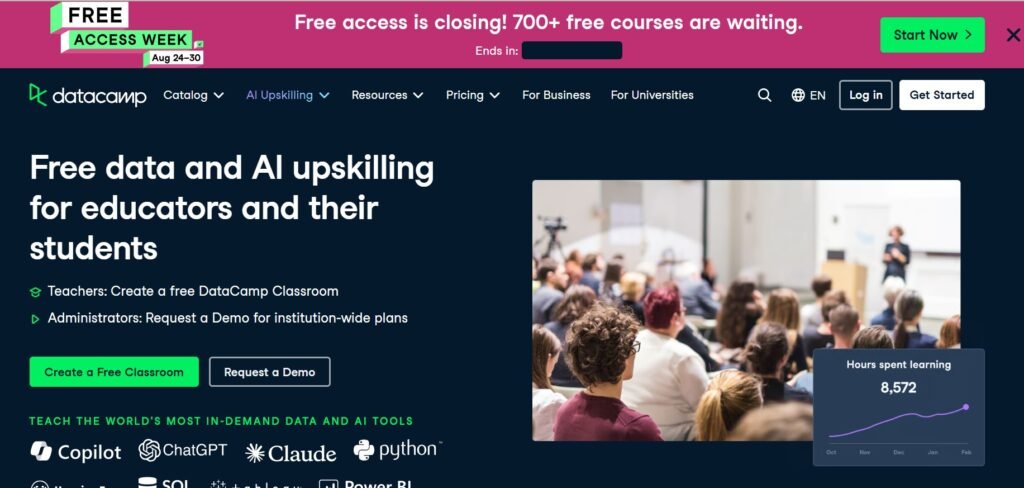
DataCamp focuses heavily on data and analytics education.
Its free lessons introduce tools such as Excel, Python, R, and data visualization.
This variety allows you to test different workflows before choosing a specialization.
Perhaps Python feels natural.
Maybe you prefer spreadsheet analysis.
You might enjoy visualizing data through charts.
DataCamp gives you exposure to several possibilities.
That exposure can save you from committing to the wrong path too early.
Try a Python lesson.
Then explore a visualization lesson.
Compare the experiences.
Think about which tasks keep you curious.
Interest matters because data analysis involves continuous learning.
You will encounter new tools, datasets, and business questions throughout your career.
A platform that lets you explore different areas can therefore help you choose wisely.
For another practical career resource, 10 Websites to Start Learning Graphic Designs for FREE can help you develop complementary visual communication skills.
10. Alison
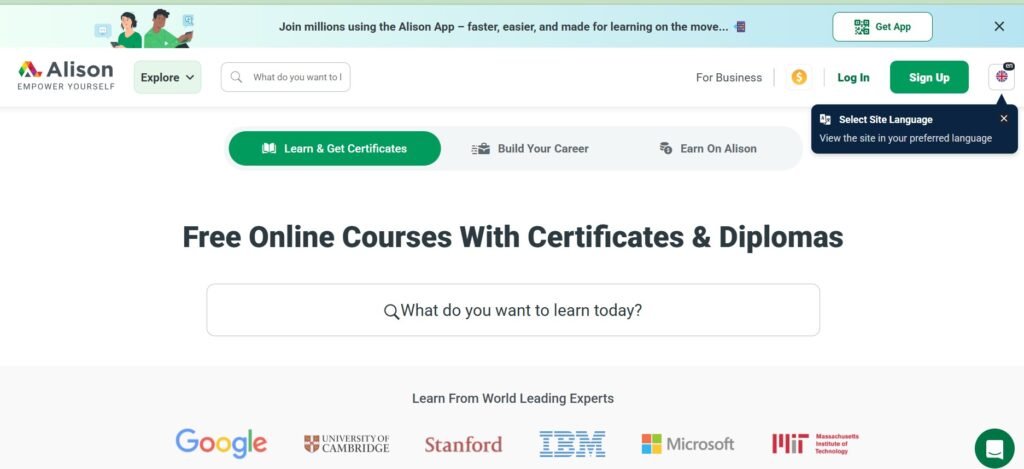
Alison offers free learning options focused on Excel, Power BI, and data analysis fundamentals.
The platform can help beginners build practical knowledge without paying for initial training.
You can study spreadsheet concepts.
You can also explore business intelligence and analytics topics.
Some courses provide certificates upon completion.
That feature can support your LinkedIn profile or portfolio.
However, treat the certificate as supporting evidence.
Your actual project experience matters more.
Create a small spreadsheet dashboard after completing an Excel lesson.
Analyze a public dataset after studying data analysis fundamentals.
Then explain your findings.
Those projects give employers something concrete to evaluate.
Alison can also support freelance learning.
You can take a course and apply your new knowledge to small client projects.
For additional income ideas, 100 Hobbies That Will Turn Your Time Into Money provides inspiration for turning useful abilities into services.
11. edX Free Audit Courses
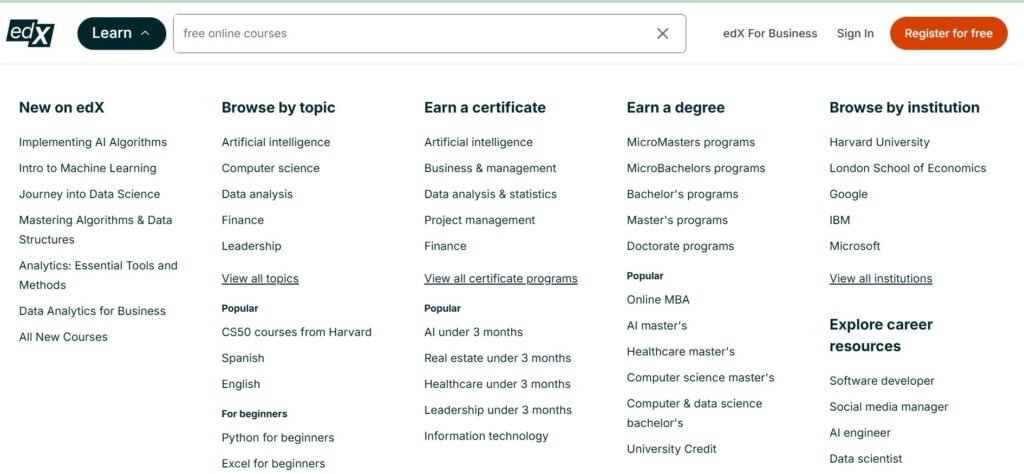
edX offers university-level courses covering statistics, Python, and business analytics.
You can access many course materials through free audit options.
That gives you access to advanced learning without paying for a certificate.
The platform includes courses from respected institutions.
You can therefore explore academic material while building practical skills.
Statistics courses can strengthen your analytical thinking.
Python courses can improve your programming knowledge.
Business analytics courses can connect technical skills with real decisions.
This combination creates a broader understanding.
You learn both how to process information and why businesses care about it.
That perspective can help during interviews.
Employers may ask how your analysis supports decisions.
You should have an answer that connects technical work with business outcomes.
If you want more flexible learning paths, 8 skills to aggressively learn and focus on if you are in your 30s can support your broader digital development.
12. YouTube Strategic Learning
YouTube can become a powerful classroom when you search carefully.
Look for creators who demonstrate complete datasets and real projects.
Avoid relying only on short videos that explain isolated concepts.
A full project can show you the complete workflow.
You might watch someone clean a dataset.
Then they may analyze it with Python.
Next, they could build a dashboard.
Finally, they may explain their findings.
That sequence helps you understand how separate skills connect.
Search for terms such as “data analysis full course” and “data analysis project.”
Choose instructors who explain their decisions.
Pause the video and recreate the project yourself.
Then modify the dataset.
Try answering a different question.
That step transforms passive watching into active learning.
YouTube also gives you access to countless explanations when a concept feels confusing.
Use different creators to hear the same idea explained differently.
For job-search support after building your skills, 10 Things You Must Do Immediately After Applying for a Job can help you improve your follow-up strategy.
How to Learn Data Analysis Effectively
Choosing from these 12 FREE Websites to Learn Data Analysis in 2026 can feel overwhelming.
You do not need to use every platform.
Instead, create a simple learning path.
Start with statistics basics through Khan Academy, Harvard, or MIT.
Then build spreadsheet skills through Microsoft Learn or Alison.
Afterward, study SQL fundamentals with freeCodeCamp or Codecademy.
Next, learn visualization with Microsoft Learn or YouTube.
Then choose Python through Kaggle, Codecademy, or DataCamp.
That sequence gives your learning a logical structure.
Do not jump between six platforms every week.
Pick one resource and complete a meaningful section.
Then apply what you learned.
Consistency matters more than quantity.
You can also strengthen your professional communication while learning. 6 Powerful Chat GPT Prompts to Help Reduce Your Workload can help you use AI more efficiently during your study process.
Build a Portfolio While You Learn
A data analysis portfolio can change how employers view your skills.
You do not need ten complicated projects.
Start with one useful project.
Choose a public dataset from Kaggle.
Clean the information.
Ask a clear question.
Analyze the data.
Create a simple visualization.
Then explain your findings.
Your explanation matters almost as much as your calculations.
A recruiter should understand the business problem you explored.
They should also understand your process.
Finally, explain what your findings suggest.
This structure demonstrates technical and communication skills together.
You can create another project using a different tool.
For example, one project can use Excel.
Another can use SQL.
A third project can use Python and visualization.
That combination creates stronger evidence.
Turn Data Analysis Into a Career Opportunity
Learning creates potential.
Application creates opportunity.
Once you build a few projects, update your resume.
Mention the tools you actually use.
Describe your projects with measurable details when possible.
Add your portfolio link.
Then optimize your LinkedIn profile around your new skills.
You can also use 8 SMART ways to find clients on X (twitter) and get hired FAST when presenting your projects clearly.
Avoid claiming professional experience you do not have.
Instead, describe your projects honestly.
Say that you completed an independent data analysis project.
Explain the dataset and tools.
Then describe the result.
Employers can still recognize your initiative.
Final Thoughts
These 12 FREE Websites to Learn Data Analysis in 2026 give beginners plenty of ways to start.
Kaggle offers hands-on practice with datasets.
freeCodeCamp provides structured technical learning.
Coursera introduces Google’s professional analytics workflow.
Microsoft Learn strengthens Excel and Power BI skills.
Harvard develops statistical thinking.
MIT provides deeper technical concepts.
Khan Academy builds mathematical foundations.
Codecademy offers interactive coding practice.
DataCamp lets you explore multiple data tools.
Alison provides beginner-friendly analytics learning.
edX connects learners with university-level courses.
YouTube adds flexible project-based learning.
Choose one platform today.
Build your foundation before chasing advanced tools.
Practice with real datasets whenever possible.
Create projects that demonstrate your abilities.
Then use those projects to strengthen your career opportunities.
You do not need an expensive course to start learning data analysis.
You need structure, consistency, curiosity, and enough practice to turn lessons into usable skills.