
8 Powerful AI Prompts you can use for job search
Disclosure: Some of the links in this post are affiliate links. This means if you click on the link and purchase an item, I will receive an affiliate commission at no extra cost to you.
Searching for a job has never been easy, but writing the perfect prompt for AI can sometimes feel even harder. You open ChatGPT, type a few words, and hope for the best. Instead, you get a response that feels too generic, too long, or simply not useful. After a few tries, it starts to feel like AI is not helping at all.
The truth is that AI is only as good as the instructions you give it. A small change in your prompt can completely change the quality of the answer. That is why people who know how to write good prompts often save hours of work while getting better results.
The good news is that you do not need to become an AI expert to make ChatGPT work for you. You simply need the right prompts. This is for you if you want to improve your resume, write a cover letter, prepare for interviews, or find better job opportunities. The right prompt can help you move faster and feel more confident throughout your job search.
Before you start applying, make sure you are building skills employers actually want. These 6 FREE Websites That Gets You Hired FAST show you where to learn many of those skills without spending money.
Once you have the right skills, AI becomes an incredible career partner. It can help you polish applications, practice interviews, tailor resumes, and even discover jobs you might have overlooked. You can also combine these prompts with 9 FREE AI Tools Every Remote Worker Should Have in 2026.
In this guide, you’ll discover powerful AI prompts you can use for job search. They help you write better applications, prepare for interviews, and stand out from other candidates. Simply copy, customize, and let AI do the heavy lifting while you focus on landing your next opportunity.
Why Most People Struggle With AI Prompts
If you’ve ever opened ChatGPT and stared at the blinking cursor, you’re not alone. Most people know AI can help with job searching, but they have no idea what to type. They ask something simple like, “Help me find a job,” or “Write my resume,” then wonder why the answer feels generic. After a few disappointing attempts, they decide AI simply is not that useful.
The truth is that the problem usually is not the AI. The problem is the prompt.
Think of ChatGPT like an incredibly smart assistant who has never met you before. It does not know your work history, career goals, strengths, or the kind of job you want unless you tell it. The more information you provide, the better the response becomes.
Imagine asking a friend, “Recommend a restaurant.” They would probably ask several questions first. What kind of food do you like? What’s your budget? How far are you willing to travel? AI works in a similar way. It needs context before it can give you helpful answers.
That is why learning AI prompts you can use for job search can completely change your experience. Instead of spending hours rewriting resumes, editing cover letters, or preparing for interviews, you can give AI clear instructions and receive responses that actually move your job search forward.
Open this next: 6 Powerful ChatGPT Prompts to Help Reduce Your Workload
How AI Prompts Actually Work
A prompt is simply an instruction that tells AI exactly what you want it to do. The clearer your instructions are, the better your results will be.
Let’s look at a simple example. Suppose you type:
“Write me a resume.”
ChatGPT has almost nothing to work with. It does not know your experience, industry, achievements, or the job you want. As a result, it produces a very general resume that could belong to almost anyone.
Now imagine you type something like this instead:
“Rewrite my resume for a Digital Marketing Specialist position. Highlight my SEO, content writing, and social media experience. Use action verbs, include measurable achievements, and optimize it for ATS while keeping it professional and easy to read.”
That single prompt gives AI a clear job to do. It knows the position you want, the skills to emphasize, the writing style to use, and even how the final document should look.
Most strong prompts include four simple ingredients. They tell AI who it should act as, what task it should complete, what information to use, and what kind of result you expect.
As you become more comfortable with AI, you should also explore 9 FREE AI Tools Every Remote Worker Should Have in 2026. Combining several AI tools with strong prompting skills can save hours every week and help you stay ahead of other job seekers.
Now that you understand how prompts work, let’s look at the first prompt. Each one builds on this simple idea and solves a real problem that many job seekers face during their search.
8 Powerful AI Prompts you can use for job search
Prompt 1: Rewrite My Resume for a Specific Job
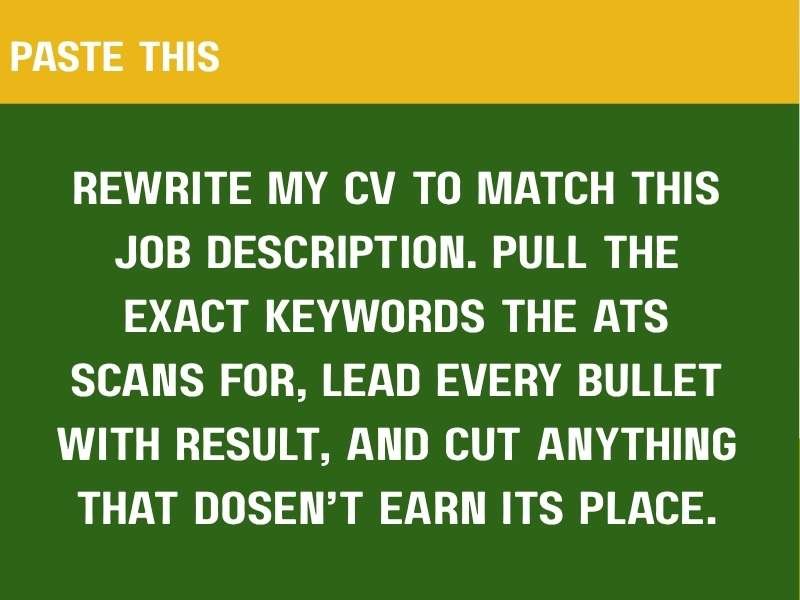
One of the biggest mistakes job seekers make is sending the same resume to every company. It certainly saves time, but it rarely produces good results. Recruiters look for candidates whose resumes match the specific role they are trying to fill. If your resume feels too general, they may move on before reading very far. This is where AI becomes incredibly helpful. This guide on Powerful AI Prompts you can use for job search will help you.
Instead of rewriting your resume from scratch every time you apply for a new position, you can use this prompt to customize it for each job description. ChatGPT can identify important keywords, highlight your most relevant experience, improve your wording, and organize your achievements in a way that matches the employer’s expectations.
That does not mean you should copy everything AI writes. Always read the final version carefully and make sure it accurately reflects your own experience. AI should improve your resume, not invent skills or achievements you do not have.
The more specific you are, the better the result becomes. Include the job description, your current resume, and any achievements you want to highlight. That gives ChatGPT enough context to produce something much stronger than a generic resume.
Read this: 10 Skills AI Can’t Replace That You Should Be Learning
Prompt 2: Beat the ATS Filter
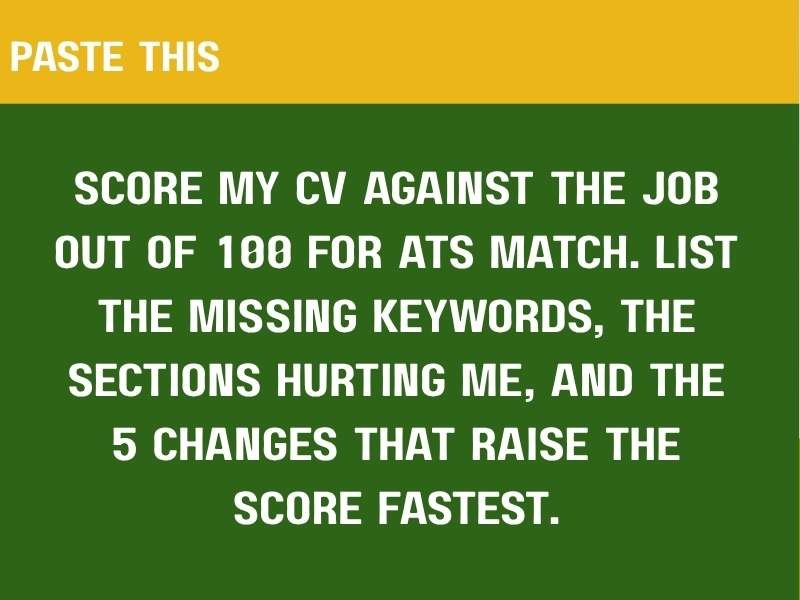
Many people believe a recruiter reads every resume that gets submitted. While that does happen, many companies first use an Applicant Tracking System, often called an ATS, to organize and filter applications. This software scans resumes for keywords, skills, and qualifications before a recruiter even opens the file.
That sounds intimidating, but it does not mean you need to stuff your resume with random keywords. In fact, doing that usually makes your application sound unnatural. Instead, you want your resume to match the job description in an honest and readable way.
This prompt helps ChatGPT compare your resume with the job posting. It can point out missing keywords, suggest stronger wording, and recommend areas where your experience could be explained more clearly. Rather than guessing what employers want, you receive practical suggestions based on the actual position you’re applying for.
Remember, ATS software is only the first step. Once your resume passes that stage, a real person will still read it. That is why you should always keep your writing natural. Your goal is to impress both the software and the hiring manager.
Using AI prompts you can use for job search like this one helps you spend less time worrying about formatting and more time showcasing your actual skills and experience.
Come back to this: 5 Lucrative Remote Skills You Can Learn in 2026
Prompt 3: Write a Cover Letter Recruiters Will Actually Read
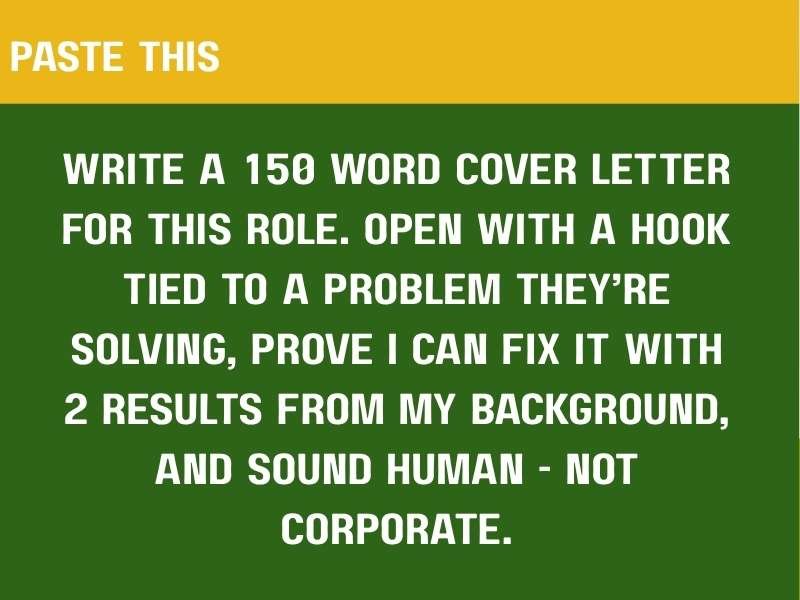
Writing a cover letter feels overwhelming for many job seekers. After spending time updating your resume, the last thing you want is another blank page waiting for you. That is why many people either skip the cover letter completely or send the exact same one to every employer. Unfortunately, recruiters notice.
A good cover letter should explain why you’re interested in that specific company and why your experience makes you a strong fit for the role. It gives you an opportunity to show personality, enthusiasm, and communication skills that a resume alone cannot always capture.
This prompt asks ChatGPT to create a personalized cover letter using your experience and the job description. Instead of producing a generic letter, AI can connect your achievements with the company’s needs while keeping the writing professional and easy to read.
After ChatGPT generates the first draft, spend a few minutes making it your own. Add a personal reason for wanting the position, mention something you admire about the company, and adjust any wording that does not sound like you.
Keep in mind that AI should help you communicate your story, not replace it. Employers want to hire real people, so your personality should still come through in the final version.
Get more inspiration here: 8 Powerful AI Prompts you can use for job search
Prompt 4: Optimize My LinkedIn Profile
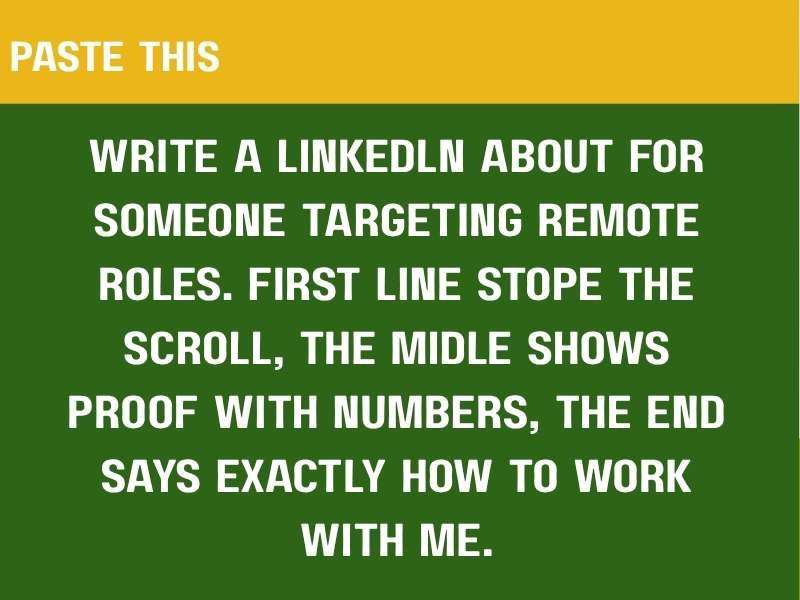
Your resume is not the only thing recruiters look at. Many hiring managers visit LinkedIn before deciding whether to schedule an interview. If your profile looks incomplete or outdated, you could miss opportunities without even realizing it.
The good news is that you do not have to rewrite your entire profile by yourself. This is one of the most useful AI prompts you can use for job search because it helps turn a basic LinkedIn profile into one that clearly communicates your skills and career goals.
When you use this prompt, ChatGPT can improve your headline, rewrite your “About” section, strengthen your work experience, and even suggest skills that match the type of jobs you’re targeting. Instead of sounding like a list of responsibilities, your profile becomes a story that highlights the value you bring to employers.
Remember that LinkedIn is more than an online resume. It is also a networking platform. Recruiters search for candidates every day, and many people receive interview invitations simply because their profiles contain the right information and keywords. Once AI gives you a draft, make sure you add your own voice.
A strong LinkedIn profile works even better when you have valuable skills to showcase. If you are still building your knowledge, 10 APPS That Teaches Tech Skills for FREE can help you continue learning while improving your professional profile.
Prompt 5: Write a Professional Networking Message
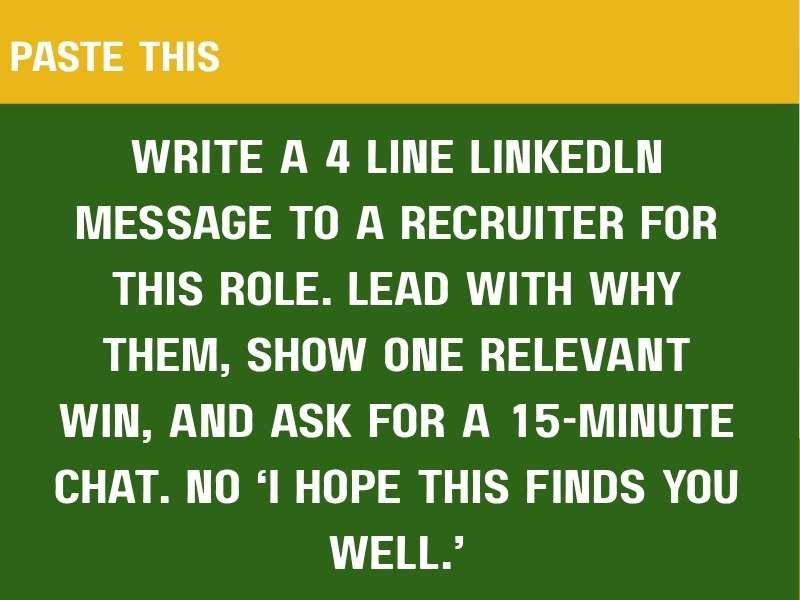
Many job opportunities never appear on job boards. Instead, they come through conversations, referrals, and professional relationships. That is why networking continues to be one of the most effective ways to find work.
Unfortunately, sending the first message often feels uncomfortable. You may worry about sounding desperate, awkward, or too formal. As a result, many people never reach out at all.
This prompt helps ChatGPT write polite, professional networking messages that sound natural rather than pushy. Whether you want to contact a recruiter, connect with someone in your industry, or ask for career advice, AI can help you organize your thoughts and keep your message respectful.
The key is remembering that networking is about building relationships, not asking strangers for jobs. Instead of immediately requesting employment, introduce yourself, mention why you wanted to connect, and show genuine interest in the other person’s work. People are much more likely to respond when they feel respected rather than pressured.
If you’re looking for freelance work instead of a traditional job, 8 SMART Ways to Find Clients on X (Twitter) and Get Hired FAST shares practical strategies for connecting with potential clients and turning conversations into real opportunities.
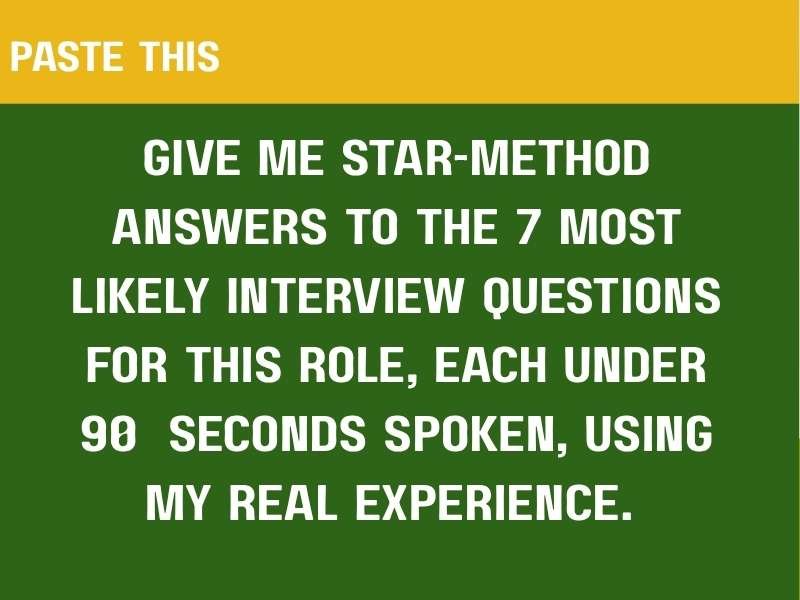
Prompt 6: Prepare Me for My Job Interview
Getting an interview feels exciting until you realize you actually have to answer the questions. Many people know they have the skills, but nerves take over once the interview begins. They forget important achievements, give short answers, or struggle to explain their experience clearly.
This is one of the most valuable AI prompts you can use for job search because it turns ChatGPT into your own interview coach.
Instead of asking AI for random interview questions, this prompt gives it the job description, your resume, and the position you’re applying for. ChatGPT can then generate realistic questions that a hiring manager is likely to ask. Even better, it can help you build confident answers that sound natural without making you memorize a script.
One technique that works particularly well is practicing with follow-up questions. If you mention leading a project, ask ChatGPT to challenge you the way an interviewer would. The more realistic your practice becomes, the more comfortable you’ll feel during the actual interview.
Remember that interviews are conversations, not exams. Employers already know you meet many of the qualifications because they invited you to interview. Now they want to understand how you communicate, solve problems, and fit into their team.
Practicing for even twenty minutes each day can make a huge difference. By the time your interview arrives, you’ll spend less time thinking about what to say and more time building a genuine conversation with the interviewer.
See this next: 9 FREE AI Tools Every Remote Worker Should Have in 2026
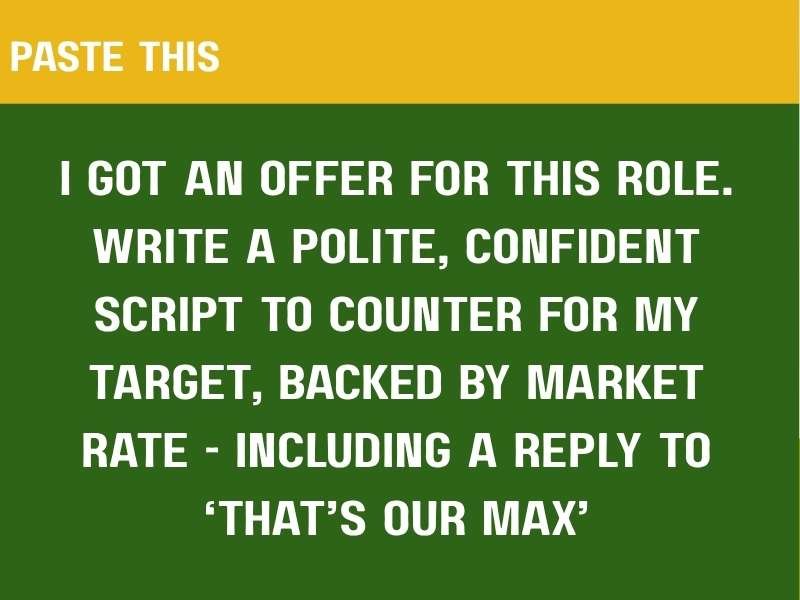
Prompt 7: Negotiate My Salary Professionally
Talking about salary makes many people uncomfortable. Some worry they’ll ask for too much and lose the opportunity. Others accept the very first offer because they do not know how to negotiate professionally.
The truth is that salary negotiation does not have to feel confrontational. It should feel like a respectful conversation between two people trying to reach an agreement.
This prompt helps ChatGPT write professional responses that express gratitude while explaining why you believe a higher salary is reasonable. It can also help you respond if an employer asks about your salary expectations before making an offer.
When using AI for salary negotiation, always provide context. Tell ChatGPT the job title, location, years of experience, salary offered, and the range you hope to achieve. The more information you provide, the more personalized the response becomes.
Keep in mind that salary is only one part of a compensation package. If the employer cannot increase the salary, you may be able to negotiate additional vacation days, flexible working hours, professional development opportunities, remote work.
Most importantly, stay polite throughout the conversation. Professionalism leaves a lasting impression, even if the company cannot meet your request. A respectful negotiation often strengthens your relationship with the employer instead of damaging it.
Prompt 8: Create a 30-Day Job Search Plan
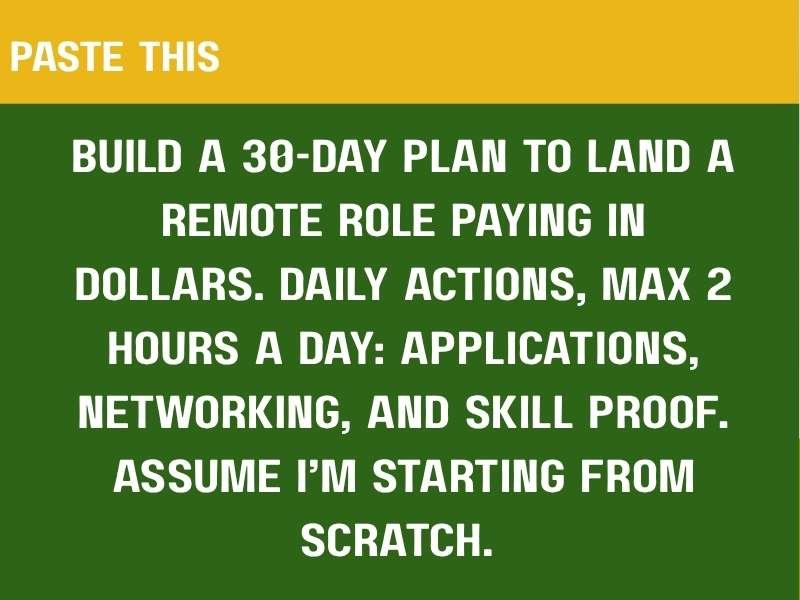
Searching for a job without a plan can feel exhausting. You might spend one day applying for ten jobs, then do nothing for the next week because you feel discouraged. Before long, you lose momentum and start wondering if you’ll ever find the right opportunity. That is exactly why this is one of the most practical AI prompts you can use for job search.
Instead of asking ChatGPT for general advice, this prompt tells it to create a personalized 30-day action plan based on your career goals. It can organize your days with realistic tasks like updating your resume, improving your LinkedIn profile, learning new skills, practicing interviews, networking with professionals, and applying for targeted positions.
Having a daily plan removes the guesswork. You no longer wake up wondering what to do next because every day has a clear purpose. Even completing one or two small tasks each day moves you closer to your goal.
You can also ask ChatGPT to adjust the plan around your schedule. If you’re working full-time, it can build a routine that fits into your evenings or weekends. If you’re currently unemployed, it can create a more intensive schedule that helps you make steady progress without feeling overwhelmed.
As you work through your plan, continue building skills that employers actually want. 6 FREE Websites That Gets You Hired FAST introduces several free platforms where you can learn valuable skills while you’re applying for jobs.
The most important thing is consistency. Applying for jobs only when you feel motivated rarely produces good results. Following a simple daily routine helps you stay focused, measure your progress, and celebrate small wins along the way.
Final Thoughts
AI is changing the way people search for jobs, but it is not a shortcut that guarantees employment. Instead, think of it as a career assistant that helps you work smarter. It can organize your thoughts, improve your applications, prepare you for interviews, and save you hours of work every week. You still bring the experience, personality, and effort. AI simply helps you present those qualities more effectively.
The best results come from combining strong prompts with continuous learning. Every time you improve your skills, complete a project, or update your resume, you become a stronger candidate. Over time, those small improvements can make a big difference in your confidence and your chances of getting hired.
As you continue using these AI prompts you can use for job search, remember to personalize every response. Read through what ChatGPT creates, adjust the wording to sound like you, and never copy information that is not true. Authenticity will always stand out more than perfectly polished but inaccurate applications.
If you’re serious about growing your career, keep learning beyond AI. 7 Websites to Start Learning Video Editing for FREE can help you develop creative skills that many businesses need.
Your next job may not come from sending hundreds of applications. It may come from sending a few excellent ones that clearly show your value. Use AI to save time, improve your confidence, and create stronger applications, but let your own experience and personality shine through. The combination of smart prompting, consistent learning, and steady action gives you the best chance of landing the opportunity you’ve been working toward.







14 Comments